
PIQSY Compare
Xiaomi Pad 7 vs OnePlus Pad 3
Compare Xiaomi Pad 7 and OnePlus Pad 3 on portability, 13.2-inch workspace, Snapdragon tier, memory, fixed storage, battery and media hardware.
The choice that matters
Choose Xiaomi for everyday portability.
Choose OnePlus for a bigger screen and demanding tasks.

Decision snapshot
Start with how you’ll use it.
Xiaomi
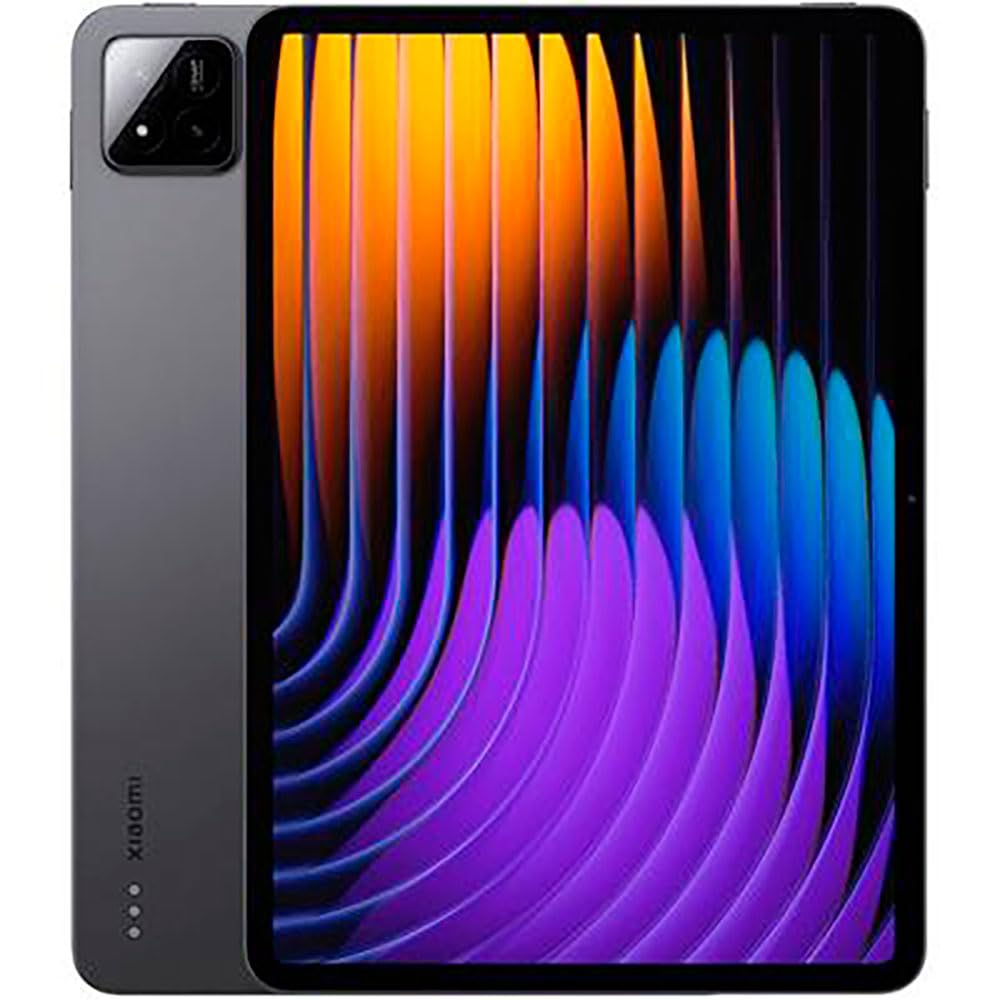
Xiaomi Pad 7
Best fit: Portable high-refresh performance
Biggest reason: 11.2-inch 3200x2136 144Hz display
Main compromise: Focus Pen and Focus Keyboard are separate purchases
OnePlus
OnePlus Pad 3
Best fit: Large-screen flagship Android performance
Biggest reason: 13.2-inch 3392x2400 adaptive 144Hz display
Main compromise: 675g chassis is substantial for handheld use
Key metrics
The measurable differences worth seeing side by side.
Bar length shows relative stated magnitude only. It is not a quality score or PIQSY rating.
Screen size
11.2 in
13.2 in
Reference storage
256 GB
512 GB
Weight
500 g
675 g
Key differences
The key differences at a glance.
These confirmed specifications differ. The advice below explains which ones matter for your needs.
8850mAh battery
12140mAh battery
251.22 x 173.42 x 6.18mm
289.61 x 209.66 x 5.97mm
24 months on current authorised AU Mobileciti listing for AU stock
1 year local warranty on current OnePlus Authorised Store Australia listing
11.2-inch 3.2K 3200x2136 IPS-class LCD, 3:2, up to 144Hz adaptive refresh, 345ppi, 800-nit peak brightness, DCI-P3, Dolby Vision
13.2-inch LTPS LCD, 3392x2400, 7:5, adaptive up to 144Hz with 120Hz default, 315ppi, 600 nits typical / 900 nits HBM, approximately 98% DCI-P3
Qualcomm Snapdragon 7+ Gen 3, 4nm, octa-core up to 2.8GHz
Qualcomm Snapdragon 8 Elite, up to 4.32GHz, Adreno 830
8GB LPDDR5X on exact reference
16GB LPDDR5X on exact canonical reference; verified 12GB family tier also exists


What matters when choosing
What you'll actually notice
These are both high-refresh Android performance tablets, but they live in different physical tiers. Xiaomi Pad 7 uses an 11.2-inch display and weighs 500g. PIQSY's OnePlus Pad 3 16GB/512GB reference uses a 13.2-inch display and weighs 675g.
That 175g difference is the first thing to understand. OnePlus gives you much more workspace and a much higher hardware ceiling: Snapdragon 8 Elite, 16GB RAM and 512GB UFS 4.0. Xiaomi gives you enough performance for many demanding tablet jobs without asking you to carry a 13.2-inch device.
PIQSY also has a separately verified 12GB/256GB OnePlus Pad 3 sibling Amazon listing, but this comparison intentionally remains bound to the 16GB/512GB reference. The sibling is not substituted into the comparison because that would change the controlled configuration.
What changes the choice
Will the larger canvas be useful often enough?
Xiaomi uses an 11.2-inch 3200×2136 display. OnePlus uses a 13.2-inch 3392×2400 LTPS LCD. Both support adaptive refresh up to 144Hz.
What this means: OnePlus gives you more room for split-screen work, large documents and media. Xiaomi is materially easier to hold, carry and use away from a desk. Refresh rate does not decide this pair because both already reach 144Hz.
Neither is OLED.
Switch when: choose OnePlus when a large workspace is a recurring benefit. Choose Xiaomi when portability matters more than extra screen area. Choose neither if OLED is mandatory.
Do you need the higher hardware ceiling?
Xiaomi uses Snapdragon 7+ Gen 3 with 8GB LPDDR5X and 256GB UFS 4.0. OnePlus uses Snapdragon 8 Elite with 16GB LPDDR5X and 512GB UFS 4.0 on the version reviewed here.
What this means: OnePlus has the stronger case for demanding gaming, heavy multitasking and buyers who genuinely need more memory and storage headroom. Xiaomi remains a credible performance tablet rather than a basic device.
Switch when: move to OnePlus when your workloads can use the flagship processor and 16GB/512GB configuration. Stay with Xiaomi when 8GB/256GB already covers the job and the smaller body is more valuable.
Does fixed storage change the purchase?
Xiaomi has 256GB UFS 4.0. OnePlus has 512GB UFS 4.0. Neither AU specification provides microSD expansion.
What this means: OnePlus doubles the internal storage, but 512GB fixed storage is not the same thing as removable storage.
Switch when: choose OnePlus when you need more built-in local space. Choose neither if microSD is a hard requirement.
Are pen and keyboard part of the package?
Xiaomi supports Focus Pen and Focus Keyboard. OnePlus supports Stylo 2 and Smart Keyboard. None is included in the exact tablet packages.
What this means: there is no pen-in-box or keyboard-in-box winner. The relevant cost is the complete setup you intend to buy, not the bare tablet.
Switch when: compare configured accessory cost and ergonomics separately if stylus or keyboard use is central. Do not treat support as inclusion.
Do wired or wireless connections separate them?
Both support USB 3.2 Gen 1 / 5Gbps-class wired connectivity. Xiaomi supports Wi-Fi 6E and Bluetooth 5.4; OnePlus supports Wi-Fi 7 and Bluetooth 5.4.
Neither product provides native cellular connectivity.
What this means: both are credible for repeated wired transfer, while OnePlus has the newer Wi-Fi generation. Cellular remains a hard no for both exact references.
Switch when: choose neither if native cellular is mandatory. Otherwise let connectivity remain secondary to form factor and hardware ceiling.
How should you read the battery numbers?
Xiaomi uses 8850mAh with 45W charging support. OnePlus uses 12140mAh with up to 80W wired charging.
What this means: OnePlus has much larger stated capacity and faster charging headroom, but it also drives a larger screen and more powerful platform. PIQSY does not convert battery size into an unsupported real-world runtime winner.
Switch when: let battery and charging strengthen the OnePlus case if those specifications matter to you, but do not use them as a substitute for controlled runtime evidence.
Does OnePlus have the stronger media-hardware case?
OnePlus uses an eight-speaker system with four woofers and four tweeters. Xiaomi uses a quad-speaker Dolby Atmos arrangement.
What this means: OnePlus has the more substantial specified speaker setup for a large-screen media device. Xiaomi's lower weight can still matter more if you watch while travelling or holding the tablet.
Switch when: favour OnePlus for desk/lap media when its larger screen and speaker system are useful. Favour Xiaomi when portable media use dominates.
The practical choice
The Xiaomi Pad 7 makes more sense when you want one tablet to travel, be held comfortably and still provide a sharp high-refresh performance experience. Its advantage is not that it beats OnePlus on raw hardware; it is that it asks you to carry much less tablet.
The OnePlus Pad 3 makes more sense when the device will spend meaningful time on a desk or stand and you can use the 13.2-inch workspace, Snapdragon 8 Elite, 16GB RAM and 512GB storage. Those are real upgrades when your workloads need them.
The durable threshold is therefore portable enough performance versus maximum Android headroom.
When to choose Xiaomi Pad 7
- 500g portability matters for commuting or handheld use.
- Snapdragon 7+ Gen 3 and 8GB/256GB meet the workload.
- An 11.2-inch high-refresh display is large enough.
- 256GB fixed storage is sufficient.
- You do not need the OnePlus flagship ceiling.
When to choose OnePlus Pad 3
- A 13.2-inch workspace materially improves productivity or media use.
- Snapdragon 8 Elite and 16GB RAM are useful for demanding workloads.
- 512GB fixed internal storage is valuable.
- The larger battery, faster charging and eight-speaker system matter.
- Carrying a 675g tablet is an acceptable trade-off.
Choose neither when
Choose neither if OLED, microSD, cellular or an included pen is mandatory. If you require iPadOS or Windows desktop software, settle the platform question before comparing these Android tablets.
PIQSY conclusion
Choose Xiaomi Pad 7 when you want high-refresh Android performance in the more portable form. Choose OnePlus Pad 3 when the large canvas and flagship 16GB/512GB hardware ceiling materially improve the work.
The better choice is the one whose physical format and capability you will actually use, not the one with the larger specification numbers.
Final choice
Choose the one that fits your needs.
Xiaomi
Xiaomi Pad 7
Choose when: Portable high-refresh performance
OnePlus
OnePlus Pad 3
Choose when: Large-screen flagship Android performance
Specifications
Compare the full specifications.
Specifications
Compare the full specifications.
8850mAh battery
12140mAh battery
251.22 x 173.42 x 6.18mm
289.61 x 209.66 x 5.97mm
24 months on current authorised AU Mobileciti listing for AU stock
1 year local warranty on current OnePlus Authorised Store Australia listing
ANDROID
ANDROID
8GB/256GB Wi-Fi Grey
16GB/512GB Storm Blue Wi-Fi
11.2-inch 3.2K 3200x2136 IPS-class LCD, 3:2, up to 144Hz adaptive refresh, 345ppi, 800-nit peak brightness, DCI-P3, Dolby Vision
13.2-inch LTPS LCD, 3392x2400, 7:5, adaptive up to 144Hz with 120Hz default, 315ppi, 600 nits typical / 900 nits HBM, approximately 98% DCI-P3
Qualcomm Snapdragon 7+ Gen 3, 4nm, octa-core up to 2.8GHz
Qualcomm Snapdragon 8 Elite, up to 4.32GHz, Adreno 830
8GB LPDDR5X on exact reference
16GB LPDDR5X on exact canonical reference; verified 12GB family tier also exists
256GB UFS 4.0 on exact reference; no microSD slot in governed AU retailer evidence
512GB UFS 4.0 on exact canonical reference; verified 256GB family tier also exists; no microSD slot listed by OnePlus AU
500g
675g
Wi-Fi 6E 2x2 MIMO and Bluetooth 5.4; regional Wi-Fi capability may vary
Wi-Fi 7 and Bluetooth 5.4
Wi-Fi-only tablet; no governed cellular/5G configuration
Wi-Fi-only reference; no cellular/5G configuration registered in current OnePlus AU specifications
13MP rear with PDAF; 8MP front
13MP rear; 8MP front
8850mAh typical; Xiaomi rates up to 20.4 hours video playback under internal test conditions; supports 45W turbo charging
12140mAh typical; supports up to 80W wired charging
Supports Xiaomi Focus Pen, sold separately
Supports OnePlus Stylo 2, sold separately
No
No
Supports Xiaomi Pad 7 / 7 Pro Focus Keyboard, sold separately
Supports OnePlus Smart Keyboard, sold separately
No
No
USB-C USB 3.2 Gen 1 up to 5Gbps; USB 3.2 capability requires a compatible cable sold separately
USB-C USB 3.2 Gen 1 up to 5Gbps
No power adapter included in the current Xiaomi Australia package specification
Current OnePlus AU box-content specification lists tablet, Type-C cable, quick-start and safety/warranty material; charger is not listed
Xiaomi HyperOS 2
OxygenOS 15 based on Android 15
Unverified
Eight-speaker system: four woofers and four tweeters
Keep comparing
Related comparisons worth checking.
Still not clear?
Let your own priorities break the tie.
Keep Exploring
How we checked this
See the Australian models and sources PIQSY checked for this page.
How we checked this
See the Australian models and sources PIQSY checked for this page.
How we checked this
How PIQSY checked this page
We checked the Australian model and dated manufacturer or retailer sources rather than borrowing specifications from an overseas variant.
Australian model checked
2 Australian models checked
Sources used
Manufacturer · Australian retailer · Amazon AU
Sources checked through 1 Sept 2026
Last checked
2 Sept 2026
Current price and availability are checked separately where shown.
Hands-on testing: PIQSY has not physically tested this product for this page unless hands-on testing is explicitly disclosed.
What we could and couldn’t verify: If specifications conflict, cannot be matched to the Australian variant or cannot be confirmed, we leave them unresolved rather than guessing. Owner feedback is shown only when we can attribute it to the product we checked.
See models and source details
- Xiaomi Pad 7: 8GB/256GB Wi-Fi Grey
- OnePlus Pad 3: 16GB/512GB Storm Blue Wi-Fi
Sources used
- Manufacturer · mi.com · Xiaomi Pad 7 · checked 31 Aug 2026
- Manufacturer · mi.com · Xiaomi Pad 7 · checked 31 Aug 2026
- Australian retailer · mobileciti.com.au · Xiaomi Pad 7 · checked 31 Aug 2026
- Amazon AU · amazon.com.au · Xiaomi Pad 7 · checked 31 Aug 2026
- Manufacturer · oneplus.com · OnePlus Pad 3 · checked 31 Aug 2026
- Manufacturer · oneplus.com · OnePlus Pad 3 · checked 31 Aug 2026
- Australian retailer · oneplusmobile.com.au · OnePlus Pad 3 · checked 31 Aug 2026
- Amazon AU · amazon.com.au · OnePlus Pad 3 · checked 31 Aug 2026
- Amazon AU · amazon.com.au · OnePlus Pad 3 · checked 1 Sept 2026