
PIQSY verdict
Xiaomi Pad 7 Verdict
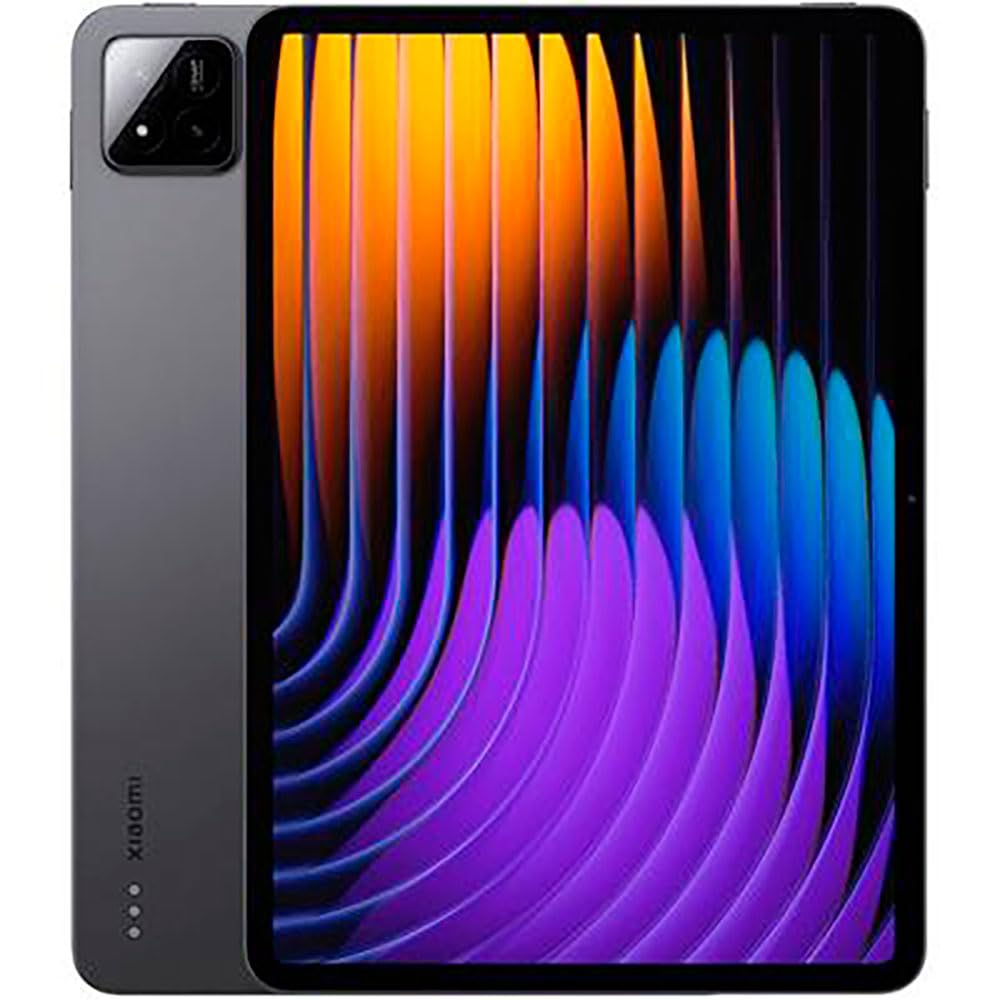
PIQSY's decision-led verdict on Xiaomi Pad 7 8GB/256GB Wi-Fi: when its 11.2-inch 3.2K 144Hz display, Snapdragon 7+ Gen 3 and USB 3.2 make it the right portable performance Android tablet.
Australian model checkedXiaomi Pad 7
Best fit
- Portable high-refresh Android use
- General performance and media
- USB 3-class file workflows
Skip if
- An included pen is required
- Expandable storage is required
- OLED or native cellular is mandatory
Biggest reason to buy
The 11.2-inch 3.2K 144Hz display, Snapdragon 7+ Gen 3 and USB 3.2 give the Pad 7 a strong performance/portability balance at about 500g.
Main compromise
Pen and keyboard are separate, storage is fixed, there is no cellular option and the Australian box does not include a power adapter.
Last checked price
$647 AUD
Recent
Amazon AU listing
★ 4.6
75 ratings
checked 4 Oct
What matters
Why it earns consideration — and why you might skip it.
Who it fits
The Xiaomi Pad 7 is for buyers who want high-refresh Android performance without carrying a 13-inch tablet. PIQSY's version reviewed here is the 8GB/256GB Wi-Fi Grey configuration: an 11.2-inch 3200×2136 display, Snapdragon 7+ Gen 3, 8GB LPDDR5X memory, 256GB UFS 4.0 storage and USB 3.2 Gen 1 in a 500g chassis.
It is best suited to media, gaming, travel and portable productivity buyers who value display resolution, refresh rate and performance more than an included pen or a very large workspace.
Decision snapshot
Choose it for
- 11.2-inch 3200×2136 display with adaptive refresh up to 144Hz
- Snapdragon 7+ Gen 3 with 8GB LPDDR5X and 256GB UFS 4.0
- 500g, 6.18mm chassis is easier to carry than 13-inch performance tablets
Know before buying
- Focus Pen and Focus Keyboard are separate purchases
- No microSD expansion in the AU reference evidence
- No cellular option
Retailer prices
Prices we've recently checked.
We keep retailer prices separate from product fit. Different retailers and marketplace sellers can show different prices, and prices and availability can change. Check the retailer before buying.
mobileciti.com.au
$647
What changes the decision
The 11.2-inch 3.2K 144Hz display is the core proposition
Xiaomi specifies a 3200×2136, 3:2 display at 345ppi, with adaptive refresh up to 144Hz, DCI-P3 colour and up to 800 nits peak brightness.
The important choice is not simply 144Hz versus a lower number. This screen gives the Pad 7 a strong mix of sharpness, smooth interaction and manageable size. It is more portable than a 13-inch productivity tablet while offering substantially more workspace than a compact gaming tablet.
The panel is LCD, not OLED. Buyers specifically prioritising OLED contrast should treat that as a separate requirement rather than assuming resolution and refresh rate compensate for panel technology.
Snapdragon 7+ Gen 3 is strong without turning this into a specialist gaming tablet
The version we checked uses Snapdragon 7+ Gen 3 with 8GB LPDDR5X memory and 256GB UFS 4.0 storage. That is a credible platform for demanding Android apps, gaming and multi-window work.
It does not provide the specialist cooling hardware or controls of a dedicated gaming tablet, and it does not have the 16GB/flagship-chip ceiling of OnePlus Pad 3. The Pad 7's strength is the balance between performance and portability rather than maximum specification at any cost.
USB 3.2 is a meaningful productivity advantage
The USB-C port supports USB 3.2 Gen 1 up to 5Gbps. Xiaomi notes that the faster USB mode requires a compatible cable, which is sold separately.
That matters for repeated file transfers and external-storage workflows. It is a genuine distinction from tablets limited to USB 2.0, but the connector alone still does not establish a desktop replacement workflow.
Pen and keyboard support do not mean either is in the box
Xiaomi supports Focus Pen and Focus Keyboard, but both are separate purchases on PIQSY's version reviewed here.
A buyer who expects a complete pen-led study package should compare total bundle cost and convenience against products such as Lenovo Idea Tab Pro Gen 2, whose Australian model checked includes its Pen Plus.
Fixed storage and Wi-Fi-only connectivity are the main structural limits
The reference provides 256GB UFS 4.0 storage. Xiaomi's current AU specification and retailer evidence do not establish microSD expansion, and PIQSY has no cellular Pad 7 configuration.
That makes storage selection and connectivity requirements important before purchase. Buyers with large offline libraries cannot assume a removable-storage path, while cellular-required buyers should fail the product rather than treating phone tethering as equivalent.
For many Wi-Fi-first shoppers, 256GB may be sufficient. The point is that these are fixed boundaries rather than features that can be added later.
Battery and charging are useful, but the box remains minimalist
Xiaomi specifies an 8850mAh typical battery, 45W turbo charging and up to 20.4 hours of video playback under internal test conditions.
That manufacturer figure is not a promise for gaming, high brightness or sustained 144Hz use. The current Australian package also lists no power adapter, so buyers wanting 45W charging need a compatible charger rather than assuming one is in the box.
owner feedback must remain separate from the hardware case. PIQSY's exact Amazon AU identity is as B0DZT3YFQX, while the free Australian source sweep did not surface a substantial exact review-level pool. Any structured Amazon recovery is therefore treated as directional experience evidence only and never as a Fit or popularity bonus.
Owner views
Owner feedback still developing
Owner feedback is still developing, so PIQSY is not presenting a consensus yet.
Who should choose something else
The Pad 7 should win on its balance of portability, display and performance rather than trying to imitate larger or more fully bundled tablets.
- Switch to the Lenovo Idea Tab Pro Gen 2 when a 13-inch matte workspace, included Pen Plus, microSD and stronger study/productivity bundle matter more than Xiaomi's 500g portability.
- Choose the OnePlus Pad 3 when a larger 13.2-inch canvas and higher flagship performance ceiling are genuine requirements.
- Choose the Galaxy Tab S11 when AMOLED, included S Pen, microSD or Samsung DeX are hard requirements rather than optional extras.
If iPadOS or Windows software is non-negotiable, resolve the platform requirement before comparing Android specifications.
PIQSY conclusion
Buy Xiaomi Pad 7 when you want a fast, sharp, high-refresh Android tablet that stays close to the 500g portability class. Its 11.2-inch 3.2K display, Snapdragon 7+ Gen 3, 8GB/256GB configuration and USB 3.2 give it a strong portable-performance role.
Skip it if you require an included pen, expandable storage, cellular connectivity or OLED. In those cases, its specification strengths do not compensate for the missing requirement.
Its strongest case is portable high-refresh Android performance without moving to a 13-inch chassis.
Final decision
Ready to choose, or want one more check?
Quick answers
Frequently asked questions
Who is the Xiaomi Pad 7 best for?
Portable high-refresh Android use
What should I compare first on the Xiaomi Pad 7?
The published Display figure PIQSY uses is 11.2-inch 3.2K 3200x2136 IPS-class LCD, 3:2, up to 144Hz adaptive refresh, 345ppi, 800-nit peak brightness, DCI-P3, Dolby Vision. Treat it as one decision input alongside the practical trade-offs in the Verdict, not as a universal ranking.
When should I choose something else instead of the Xiaomi Pad 7?
An included pen is required
What is PIQSY's short read on the Xiaomi Pad 7?
PIQSY's decision-led verdict on Xiaomi Pad 7 8GB/256GB Wi-Fi: when its 11.2-inch 3.2K 144Hz display, Snapdragon 7+ Gen 3 and USB 3.2 make it the right portable performance Android tablet.
Technical detail
Specifications
See full specifications
| Platform | ANDROID |
|---|---|
| Reference Pricing Configuration | 8GB/256GB Wi-Fi Grey |
| Display | 11.2-inch 3.2K 3200x2136 IPS-class LCD, 3:2, up to 144Hz adaptive refresh, 345ppi, 800-nit peak brightness, DCI-P3, Dolby Vision |
| Processor | Qualcomm Snapdragon 7+ Gen 3, 4nm, octa-core up to 2.8GHz |
| Memory | 8GB LPDDR5X on exact reference |
| Storage | 256GB UFS 4.0 on exact reference; no microSD slot in governed AU retailer evidence |
| Weight | 500g |
| Dimensions | 251.22 x 173.42 x 6.18mm |
| Wireless | Wi-Fi 6E 2x2 MIMO and Bluetooth 5.4; regional Wi-Fi capability may vary |
| Connectivity | Wi-Fi-only tablet; no governed cellular/5G configuration |
| Cameras | 13MP rear with PDAF; 8MP front |
| Battery | 8850mAh typical; Xiaomi rates up to 20.4 hours video playback under internal test conditions; supports 45W turbo charging |
| Stylus | Supports Xiaomi Focus Pen, sold separately |
| Pen Included | No |
| Keyboard | Supports Xiaomi Pad 7 / 7 Pro Focus Keyboard, sold separately |
| Keyboard Included | No |
| Ports | USB-C USB 3.2 Gen 1 up to 5Gbps; USB 3.2 capability requires a compatible cable sold separately |
| Charger | No power adapter included in the current Xiaomi Australia package specification |
| Operating System | Xiaomi HyperOS 2 |
Keep Exploring
Research provenance
See how PIQSY verified this recommendation.
Research provenance
See how PIQSY verified this recommendation.
How we checked this
How PIQSY checked this product
We checked the Australian model and dated manufacturer or retailer sources rather than borrowing specifications from an overseas variant.
Australian model checked
8GB/256GB Wi-Fi Grey
Model / identifier: Xiaomi Pad 7
Sources used
Manufacturer · Australian retailer · Amazon AU
Sources checked through 31 Aug 2026
Last checked
12 Sept 2026
Price checked 25 Oct 2026
Hands-on testing: PIQSY has not physically tested this product for this page unless hands-on testing is explicitly disclosed.
What we could and couldn’t verify: If specifications conflict, cannot be matched to the Australian variant or cannot be confirmed, we leave them unresolved rather than guessing. Owner feedback is shown only when we can attribute it to the product we checked.
See models and source details
Sources used
- Manufacturer · mi.com · checked 31 Aug 2026
- Manufacturer · mi.com · checked 31 Aug 2026
- Australian retailer · mobileciti.com.au · checked 31 Aug 2026
- Amazon AU · amazon.com.au · checked 31 Aug 2026