
PIQSY Guide
Portable Air Conditioner Venting Guide Australia: Check This Before You Buy
A decision-first guide to portable AC exhaust routes, window-kit fit, hose placement, drainage and installed footprint before comparing cooling capacity or features.
The decision this guide answers
Can this room support a manufacturer-compatible portable-AC exhaust installation before the shopper compares cooling capacity, heating, controls, noise, weight or price?
Quick answer
Every refrigerated portable air conditioner in PIQSY's current Australian shortlist needs a practical way to reject heat outdoors during cooling. That means the first buying question is not “which model has the highest kW?” It is “can this room support the exhaust setup for the exact model?”
Use this order:
- Identify a workable route to outdoors.
- Check the exact window or door opening against the supplied kit and manual.
- Confirm the exhaust hose can reach without being crushed, sharply kinked or forced through an awkward route.
- Measure the appliance as an installed system, including hose and window connection.
- Check condensate and drainage instructions for the modes you plan to use.
- Consider security, weather exposure and any property-permission issue created by the installation.
- Only then compare cooling capacity, heating, inverter control, noise evidence, smart features, weight and current price.
If the room cannot support a practical manufacturer-compatible exhaust arrangement, move to a different cooling approach rather than buying a larger portable AC and hoping capacity will compensate.
What should you decide first?
Where will the heat actually go?
A refrigerated portable AC cools the room by moving heat. The heat does not disappear; it has to be rejected through the exhaust system.
Do not plan to terminate the hot exhaust back into the same room. Likewise, do not assume another indoor room, an enclosed cupboard or a roof space is an acceptable substitute for the installation arrangement described for the appliance.
Start with the room itself. Identify the window, door or other opening the exact model can use, then check whether the unit can sit close enough without blocking normal movement or creating an impractical hose path.
Does the supplied window kit fit your actual opening?
“Window kit included” does not mean “fits every window”.
Slider panels can work well when the opening geometry matches the kit. Casement, awning and unusual windows can require a different manufacturer-compatible solution.
Before buying, measure the usable opening, not just the full frame. Check the panel orientation, minimum and maximum span, screens, locks, handles, tracks and any obstruction around the exhaust outlet.
If the only workable setup requires drilling, cutting or permanent hardware, treat that as a separate property question. PIQSY cannot determine the permissions that apply to a specific rental, strata scheme or building.
Can the hose work without forcing the room layout?
The cabinet may be on castors, but the hose still constrains where the appliance can operate.
Plan the appliance + hose + window connection together. Avoid a layout that depends on crushing the hose behind furniture, sharply kinking it, stretching it beyond the model's instructions or routing it through repeated tight bends.
Hose dimensions and extension limits are model-specific. One exact example is the De'Longhi PACEL110ERFWIFI, for which De'Longhi publishes a 1,200mm venting hose with a 150mm diameter. Use those figures for PACEL110 planning only; do not transfer them to another model.
Which setup fits you?
Standard sliding-window setup
This is the most straightforward case when the supplied panel fits the opening, the appliance can sit nearby and the hose can run without an awkward bend.
Confirm that the window can still be secured appropriately and that the temporary opening remains weather-practical. If the panel leaves gaps, use only a sealing approach compatible with the model and window arrangement.
Casement, awning or unusual window
Do not assume the rigid slider shown on a product page will solve an outward-opening or otherwise unusual window.
Check the exact manual and manufacturer-supported accessories before purchase. If you cannot identify a practical, secure and weather-sensible route, the room may not suit this category.
Room where the appliance must move frequently
Movement changes the decision because the exhaust setup has to be recreated each time.
The Kogan KAWFPAC07YA is the lightest product in the current shortlist at 19kg, while Dimplex DCP35FS is 22.5kg. Those weights make them easier to move than the 30kg-plus units, but the exhaust connection still has to work in every room where you intend to use them.
A lighter cabinet is only a mobility advantage when each destination has a viable exhaust arrangement.
Reverse-cycle setup
The Midea MPPD33H and Hyundai HY13KSPACPA are the reverse-cycle options in the current ten-product shortlist.
That expands their seasonal role because they also provide heat-pump heating. It does not remove the cooling-mode exhaust requirement. If heating is essential, narrow to reverse-cycle models first, then perform the same cooling installation checks.

19kg small-room mobility
Kogan SmarterHome 2.0kW Portable Air ConditionerBudget-first shoppers cooling a genuinely small room who also value low carrying weight and app control.
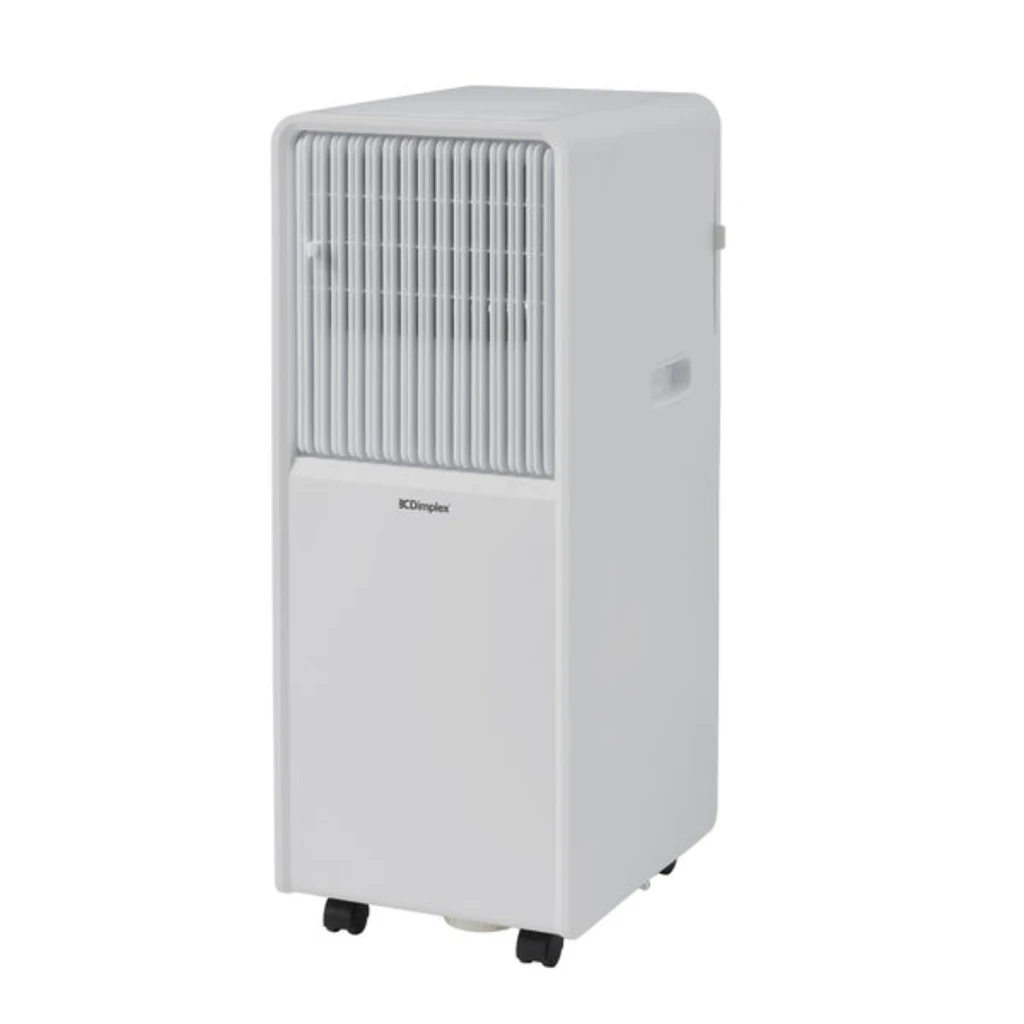
22.5kg + built-in Wi-Fi
Dimplex 3.5kW Portable Air Conditioner with Wi-FiShoppers wanting 3.5kW cooling and Wi-Fi in a notably lighter portable chassis for moving between rooms.

Reverse-cycle + i-Sense
Midea Reverse Cycle Portable Air ConditionerMedium-room shoppers who need one portable appliance for both summer cooling and heat-pump heating and prefer an established appliance brand.
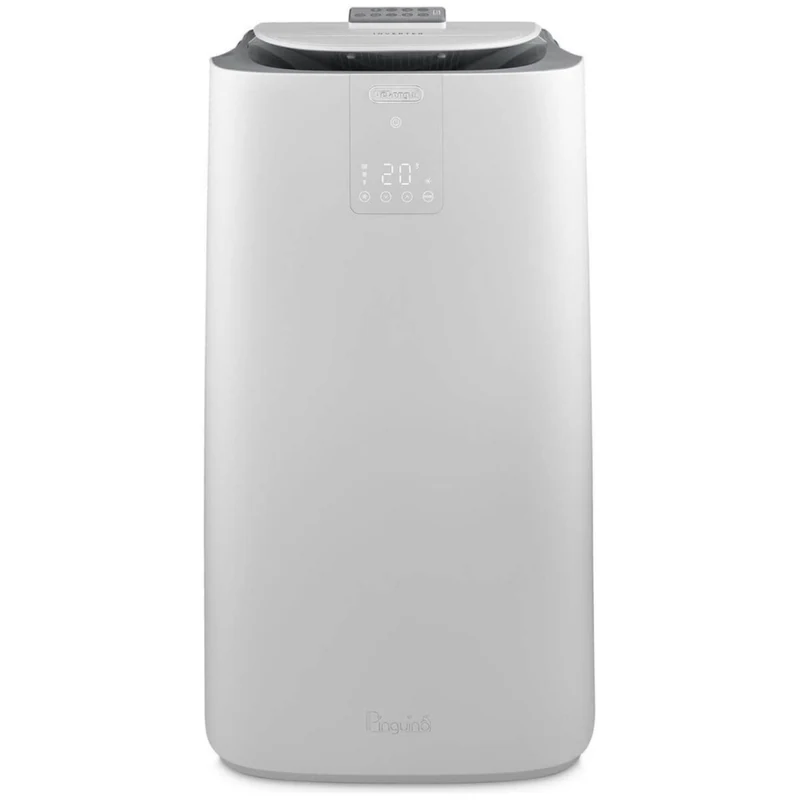
3.7kW inverter + lower sound-pressure floor
De'Longhi Pinguino GentleJet Inverter Portable Air ConditionerPremium shoppers prioritising lower-noise portable cooling, inverter control and stronger cooling headroom over app connectivity or lowest price.
These four examples show why installation comes first: they solve different capacity, mobility, heating and control jobs, but every one still depends on a workable exhaust route.
Decision factors
Installed footprint is larger than the cabinet
Published dimensions describe the appliance body, not the complete setup.
For example, the compact Kogan KAWFPAC07YA measures 305 × 290 × 665mm, but it still needs room for the exhaust hose, adaptor and window connection.
Measure cabinet width and depth, hose routing space, window-panel area, access to controls and filters, nearby furniture, walking clearance, power-point access and any drainage path required by the exact mode.
A product can fit on paper and still fail when the installed hose occupies the only practical walkway or furniture position.
Condensate and drainage vary by model and mode
Portable ACs remove moisture as they cool. The way that water is handled differs between products and operating modes.
Some models describe self-evaporative or condensate-recycling behaviour. That can reduce routine water handling, but it does not mean drainage will never be required.
Use the exact manual to check drain-port position, whether continuous drainage is specified for a particular mode, what happens when the internal reservoir reaches its limit, whether heating or dehumidification changes drainage behaviour, and what is required before storage.
A room can pass the exhaust check and still be inconvenient if the only viable appliance position makes drainage awkward.
Capacity cannot fix an installation problem
The current shortlist spans 2.0kW to 4.1kW stated cooling capacity.
That range matters for heat-load matching, but it solves a different problem from exhaust. Capacity asks whether the refrigeration system has enough cooling headroom. Venting asks whether the heat can be rejected outside as intended.
Buying the 4.1kW Kogan instead of the 2.0kW Kogan does not rescue a room with no workable exhaust route.
Manufacturer room-size guidance comes after installation feasibility
Several brands publish square-metre guidance. Keep those ranges attributed to the manufacturer rather than treating them as one universal sizing method.
Room area alone does not capture glazing, solar load, insulation, ceiling height, occupants or local climate.
The useful sequence is exhaust feasibility → heat-load/capacity fit → heating requirement → noise, controls and weight → current commerce factors.
What matters less than you might think
The first thing that matters less is the highest cooling-capacity number. More kW can be useful for a higher heat load, but it cannot compensate for a hose that cannot reach or a window kit that does not fit.
The second is the word “portable”. Castors and lower weight make an appliance easier to move, but the room still needs a repeatable exhaust setup. A 19kg unit is not truly flexible if only one room has a compatible window.
The third is “self-evaporative”. Treat it as a water-management feature, not as a promise that no drainage will ever be needed.
The fourth is Wi-Fi. App control can be convenient, but it does not change the physical need for an exhaust path or correct sizing.
What specs actually matter
For venting and installation, the most useful specifications are:
- exact supplied exhaust/window hardware for the Australian model;
- hose length and diameter when the manufacturer publishes them;
- cabinet dimensions, combined with your own allowance for hose bends and window connection;
- weight, if the unit will genuinely move between rooms;
- drain-port and condensate instructions for cooling, dehumidification and heating modes;
- cooling capacity, after installation feasibility is confirmed; and
- reverse-cycle capability, when one appliance must cover both summer and winter.
Do not invent a universal maximum hose length or bend rule across brands. Follow the exact model instructions.
Also keep acoustic measurements in their stated class. Sound pressure and sound power are not interchangeable, and an unspecified dB headline should not be ranked directly against a clearly labelled sound-pressure figure.
Common buying mistakes
The most common mistake is choosing the product before checking the room. A compelling price or strong feature list can make shoppers assume the window problem will be solved later. Reverse the process: prove the installation first.
The second mistake is measuring only the cabinet. The hose, adaptor and opening can make the real footprint much larger.
The third is assuming every “window kit” works with every window. The opening style, span, screens, locks and tracks can all change compatibility.
The fourth is stretching or sharply bending the hose because the preferred furniture layout puts the appliance too far away. Use the model's instructions rather than designing around an assumed universal hose tolerance.
The fifth is treating self-evaporation as zero-drainage operation. Humidity, mode and exact product design can change condensate behaviour.
The sixth is ignoring security and weather. A temporary opening can affect locking and sealing. If you cannot make the installation practical for the room, that is a reason to choose another cooling approach.
The seventh is making permanent property changes before checking the permissions that apply to the actual home. A removable kit and a drilled or altered opening are different situations.
Where should you go next?
Once the room passes the venting and installation check, use PIQSY Match to narrow the current ten-product shortlist.
For connected control versus inverter cooling, read De'Longhi PACEL110 vs GentleJet.
For warranty and acoustic documentation versus lower weight and Wi-Fi, read TCL TAC-12CPB-MZ vs Dimplex DCP35FS.
For reverse-cycle choices, read Midea MPPD33H vs Hyundai HY13KSPACPA.
For high-capacity cooling, read Midea MPPD40C vs Kogan KASIPAC14YA.
For the small-room end of the category, read Rinnai RPC26MCWF vs Kogan KAWFPAC07YA.
You can also review the full Portable Air Conditioners shortlist.
The decision order is simple: prove the exhaust setup → match capacity to the room → decide whether heating is required → compare control, noise evidence, weight and current price. If the exhaust setup fails, change the cooling approach instead of forcing a portable AC into the room.
PIQSY Care
Already own one? Keep it working properly.
Practical cleaning, maintenance and troubleshooting for this category, grounded in current manufacturer guidance.
Care guide
Portable AC Filter and Condensate Care: What to Clean and Drain
How do I keep a portable air conditioner's air filter and condensate path working without washing the wrong component, creating a drain leak or assuming self-evaporation means no water maintenance?
Open Care guide →Care guide
Portable Air Conditioner Not Cooling? What to Check First
Is my portable air conditioner failing to cool because of exhaust setup, room load, mode, dirty airflow, condensate or a genuine appliance fault?
Open Care guide →Apply what you learned
Turn the trade-off into a shortlist that fits you.
Keep Exploring
How we checked this
See the Australian models and sources PIQSY checked for this page.
How we checked this
See the Australian models and sources PIQSY checked for this page.
How we checked this
How PIQSY checked this page
We checked the Australian model and dated manufacturer or retailer sources rather than borrowing specifications from an overseas variant.
Australian model checked
10 Australian models checked
Sources used
Manufacturer · Amazon AU · Australian retailer · Australian distributor
Sources checked through 23 Aug 2026
Last checked
26 Aug 2026
Current price and availability are checked separately where shown.
Hands-on testing: PIQSY has not physically tested this product for this page unless hands-on testing is explicitly disclosed.
What we could and couldn’t verify: If specifications conflict, cannot be matched to the Australian variant or cannot be confirmed, we leave them unresolved rather than guessing. Owner feedback is shown only when we can attribute it to the product we checked.
See models and source details
- DeLonghi Pinguino GentleJet Portable Air Conditioner AP140I: AP140I
- De'Longhi Pinguino PACEL110ERFWIFI Portable Air Conditioner: PACEL110ERFWIFI
- Dimplex 3.5kW Portable Air Conditioner with Wi-Fi DCP35FS: DCP35FS
- Hyundai 3.8kW Smart Reverse Cycle Portable Air Conditioner HY13KSPACPA: HY13KSPACPA
- Kogan SmarterHome 4.1kW Inverter Portable Air Conditioner KASIPAC14YA: KASIPAC14YA
- Kogan SmarterHome 2.0kW Portable Air Conditioner KAWFPAC07YA: KAWFPAC07YA
- Midea MPPD33H Reverse Cycle Portable Air Conditioner: MPPD33H
- Midea MPPD40C 4.0kW Portable Air Conditioner: MPPD40C
- Rinnai 2.6kW Portable Air Conditioner RPC26MCWF: RPC26MCWF
- TCL 3.5kW Portable Air Conditioner TAC-12CPB-MZ: TAC-12CPB-MZ
Sources used
- Manufacturer · delonghi.com · DeLonghi Pinguino GentleJet Portable Air Conditioner AP140I · checked 23 Aug 2026
- Manufacturer · delonghi.com · De'Longhi Pinguino PACEL110ERFWIFI Portable Air Conditioner · checked 23 Aug 2026
- Amazon AU · amazon.com.au · De'Longhi Pinguino PACEL110ERFWIFI Portable Air Conditioner · checked 23 Aug 2026
- Australian retailer · appliancesonline.com.au · De'Longhi Pinguino PACEL110ERFWIFI Portable Air Conditioner · checked 23 Aug 2026
- Manufacturer · dimplex.com.au · Dimplex 3.5kW Portable Air Conditioner with Wi-Fi DCP35FS · checked 23 Aug 2026
- Manufacturer · dimplex.com.au · Dimplex 3.5kW Portable Air Conditioner with Wi-Fi DCP35FS · checked 23 Aug 2026
- Australian retailer · bigw.com.au · Dimplex 3.5kW Portable Air Conditioner with Wi-Fi DCP35FS · checked 23 Aug 2026
- Australian distributor · kogan.com · Hyundai 3.8kW Smart Reverse Cycle Portable Air Conditioner HY13KSPACPA · checked 23 Aug 2026
- Australian distributor · assets.kogan.com · Hyundai 3.8kW Smart Reverse Cycle Portable Air Conditioner HY13KSPACPA · checked 23 Aug 2026
- Amazon AU · amazon.com.au · Hyundai 3.8kW Smart Reverse Cycle Portable Air Conditioner HY13KSPACPA · checked 23 Aug 2026
- Manufacturer · kogan.com · Kogan SmarterHome 4.1kW Inverter Portable Air Conditioner KASIPAC14YA · checked 23 Aug 2026
- Manufacturer · assets.kogan.com · Kogan SmarterHome 4.1kW Inverter Portable Air Conditioner KASIPAC14YA · checked 23 Aug 2026