
PIQSY Compare
De'Longhi Pinguino Portable Air Conditioner vs De'Longhi Pinguino GentleJet Inverter Portable Air Conditioner
Compare De'Longhi PACEL110ERFWIFI and GentleJet PACAP140IGENTLEJET on 2.9 vs 3.7kW cooling, inverter control, Wi-Fi, noise evidence, weight and venting.
The choice that matters
Choose the connected De’Longhi for remote control.
Choose the inverter De’Longhi for adaptive cooling.
Decision snapshot
Start with how you’ll use it.
De'Longhi
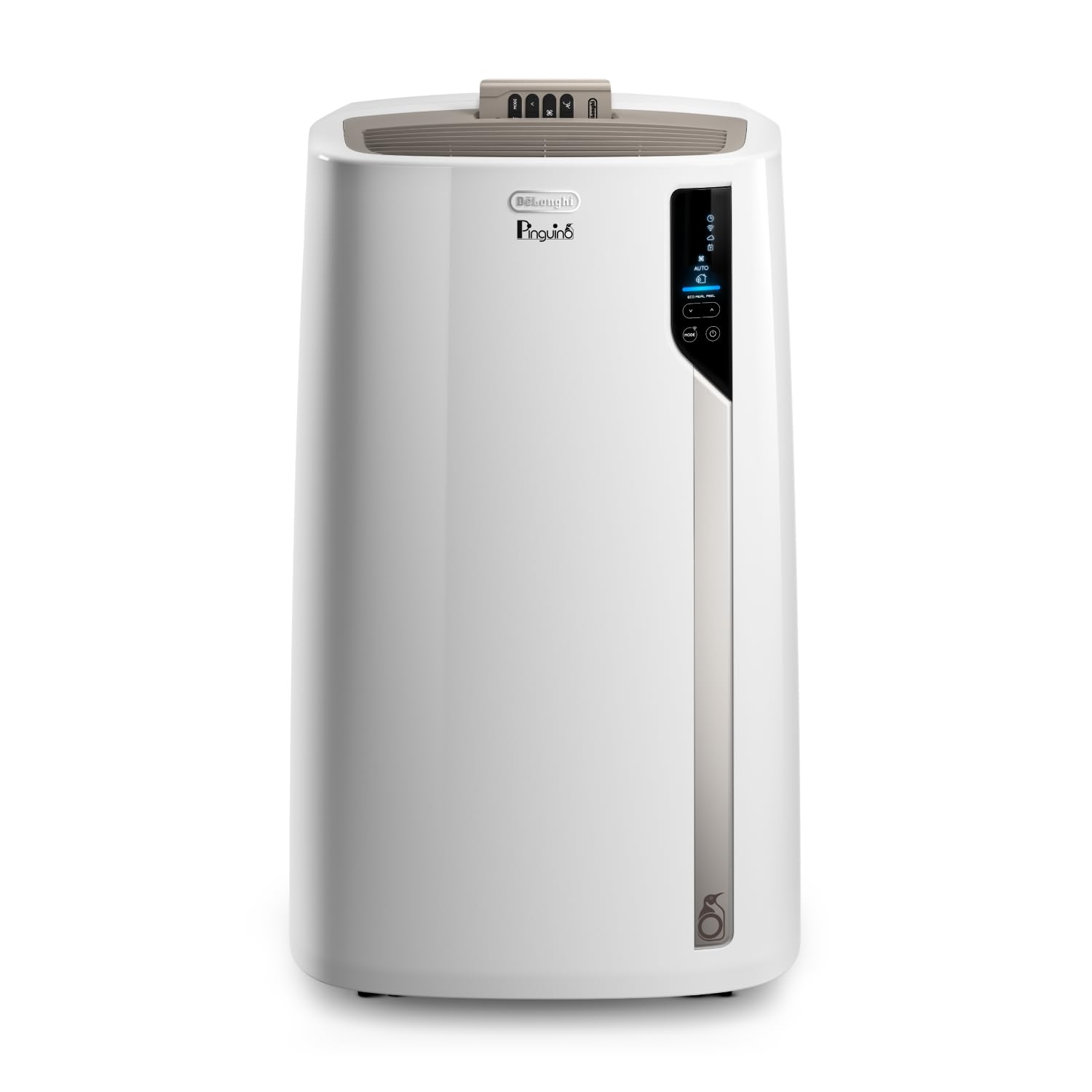
De'Longhi Pinguino Portable Air Conditioner
Best fit: Built-in smart control + Eco Real Feel
Biggest reason: Eco Real Feel combines temperature and humidity sensing
Main compromise: No heating mode
Last checked price
$1,099 AUD
Close to prices we've seen recently
De'Longhi
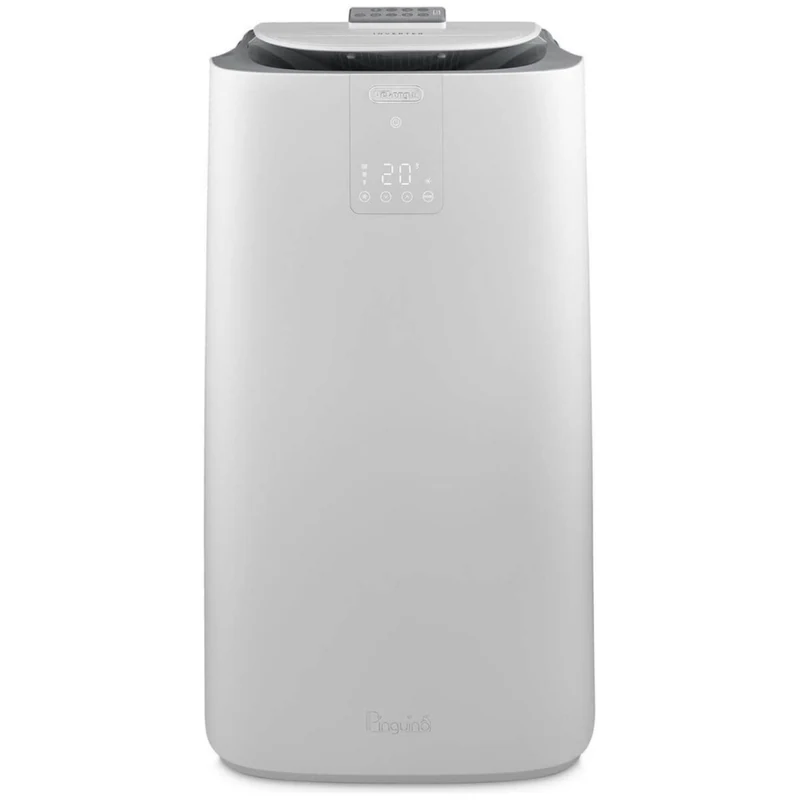
De'Longhi Pinguino GentleJet Inverter Portable Air Conditioner
Best fit: 3.7kW inverter cooling + stronger low-noise evidence
Biggest reason: Inverter compressor
Main compromise: Premium purchase price
Last checked price
$1,299 AUD
Close to prices we've seen recently
Lowest recorded $1,210.00 · 28 Aug
Key metrics
The measurable differences worth seeing side by side.
Bar length shows relative stated magnitude only. It is not a quality score or PIQSY rating.
Cooling capacity
2.9 kW
3.7 kW
Weight
32.7 kg
31.29 kg
Key differences
The key differences at a glance.
These confirmed specifications differ. The advice below explains which ones matter for your needs.
2.9kW cooling / 11,000 BTU/h
3.7kW cooling / 14,000 BTU/h
45 × 41 × 75 cm
45.7 × 36.3 × 81.4 cm
2.9 kW
3.7 kW
11,000
14,000
1,115
1,280
2.6
2.9

What matters when choosing
What you'll actually notice
The De'Longhi PACEL110ERFWIFI and PACAP140IGENTLEJET GentleJet solve the same basic job in noticeably different ways. PACEL110 pairs 2.9kW cooling with built-in Wi-Fi, app control, Alexa and Google Assistant support, plus Eco Real Feel. GentleJet moves to 3.7kW cooling and an inverter compressor, but equivalent built-in Wi-Fi is not verified for the Australian model.
The practical split is therefore not simply “smaller versus bigger”. PACEL110 suits a shopper who values connected control after confirming that 2.9kW is appropriate for the room. GentleJet suits a shopper who genuinely needs more cooling headroom or specifically wants inverter modulation.
Both are cooling-only portable air conditioners. If you need reverse-cycle heating, or the room cannot support a workable outdoor exhaust route, neither is the right choice.
What changes the choice
Cooling capacity and compressor design
PACEL110 is rated at 2.9kW / 11,000 BTU/h. GentleJet is rated at 3.7kW / 14,000 BTU/h. The 0.8kW gap is meaningful when the room has a genuinely higher heat load, but it is not a universal reason to buy the larger model. Glazing, insulation, sun exposure, ceiling height, occupancy and climate still affect the real requirement.
The compressor architecture also differs. PACEL110 is fixed-speed, while GentleJet uses an inverter compressor. That makes GentleJet the more obvious route when compressor modulation itself is a priority. It does not support a universal electricity-saving claim across every room and duty cycle.
Smart control versus airflow and low-noise mode
PACEL110 has the clearer connected-control proposition: built-in Wi-Fi, mobile-app control and Alexa/Google Assistant support. Eco Real Feel also adds De'Longhi's temperature-and-humidity comfort logic.
GentleJet instead differentiates through its inverter architecture and GentleJet airflow concept. Its manufacturer sound-pressure range is 43–50dB(A), with the 43dB(A) figure associated with Silent mode. PACEL110 is listed at 47–50dB(A) sound pressure. Because both figures are stated as sound pressure, the lower GentleJet manufacturer figure is useful evidence, but it still does not guarantee that every sleeper or room will experience it as quiet.
Weight, dehumidification and installation
PACEL110 weighs 32.7kg and GentleJet about 31.3kg. That difference is too small to make either a genuinely easy appliance to carry between floors. Treat both as movable on castors within one level.
PACEL110 is rated at 35L/day dehumidification and GentleJet at 73L/day. Those are test-condition capacities rather than promises of daily water collection in your home.
Both still need outdoor exhaust. The hose and window connection can determine whether either model is viable before capacity, app control or noise becomes relevant.
What this means: choose between these products on room load and operating style, not on a single headline specification.
Switch when: move from PACEL110 to GentleJet when the extra cooling headroom or inverter architecture becomes more important than built-in connectivity. Move the other way when 2.9kW is sufficient and connected control is the feature you will actually use.
The practical choice
Start with the room. If 2.9kW is comfortably appropriate, PACEL110 gives you a well-defined connected workflow without forcing you into a larger capacity tier. If the room genuinely needs more capacity, GentleJet's 3.7kW rating is the stronger starting point.
Then decide whether how the compressor runs matters more than how you control the unit. GentleJet is the inverter option. PACEL110 is the stronger smart-control option. Those are durable differences; price and promotions can change.
Do not use owner-review depth to reverse the technical decision. PACEL110 currently has more version checked ownership context than GentleJet, but that does not turn it into an inverter model or increase its cooling capacity.
When to choose De'Longhi PACEL110ERFWIFI
Choose PACEL110 when 2.9kW cooling is appropriate for the room and connected control is genuinely useful. It is the better fit if you expect to use the app, Alexa or Google Assistant, or if Eco Real Feel is part of the comfort workflow you want.
It also makes sense when the additional 0.8kW offered by GentleJet would be unused. Buying more capacity solely because the number is higher can add cost and size without improving the way the appliance fits your room.
Accept the trade-off: PACEL110 is fixed-speed, cooling-only and still a 32.7kg appliance that needs a practical exhaust installation.
When to choose De'Longhi PACAP140IGENTLEJET
Choose GentleJet when the room/load genuinely benefits from 3.7kW stated cooling, or when inverter compressor control is a priority.
It is also the more defensible choice when you place weight on the lower 43dB(A) Silent-mode manufacturer sound-pressure figure, provided you understand that published acoustic specifications are not the same thing as a guarantee of quiet sleep.
Accept the trade-off: built-in Wi-Fi or voice control is not verified for the Australian model, and GentleJet is still a roughly 31.3kg cooling-only portable AC that needs outdoor exhaust.
Choose neither when
Choose neither if you need reverse-cycle heating, because both models are cooling-only. The Midea MPPD33H and Hyundai HY13KSPACPA are the reverse-cycle options in the current shortlist.
Also choose neither when the room has no workable outdoor exhaust route. A portable refrigerated AC cannot solve a fundamentally incompatible window or hose setup.
If frequent stair carrying is central to the brief, both are also awkward choices. Their small weight difference does not change the fact that each is a heavy floor appliance.
PIQSY conclusion
PACEL110ERFWIFI is the connected-control choice; GentleJet is the higher-capacity inverter choice.
Choose PACEL110 when 2.9kW fits and built-in app/voice control plus Eco Real Feel matter more than inverter operation. Choose GentleJet when the room needs more cooling headroom, inverter modulation matters, or its lower manufacturer sound-pressure floor is useful to your decision.
Resolve venting and cooling-only suitability first. Then compare current delivered price and availability rather than letting a temporary promotion decide the architecture for you.
Final choice
Choose the one that fits your needs.
De'Longhi
De'Longhi Pinguino Portable Air Conditioner
Choose when: Built-in smart control + Eco Real Feel
Last checked price
$1,099 AUD
Close to prices we've seen recently
De'Longhi
De'Longhi Pinguino GentleJet Inverter Portable Air Conditioner
Choose when: 3.7kW inverter cooling + stronger low-noise evidence
Last checked price
$1,299 AUD
Close to prices we've seen recently
Lowest recorded $1,210.00 · 28 Aug
Specifications
Compare the full specifications.
Specifications
Compare the full specifications.
2.9kW cooling / 11,000 BTU/h
3.7kW cooling / 14,000 BTU/h
45 × 41 × 75 cm
45.7 × 36.3 × 81.4 cm
Unverified
Unverified
2.9 kW
3.7 kW
11,000
14,000
1,115
1,280
2.6
2.9
No
Yes
No
No
Yes
No
Yes
No
3
3
35
73
250 m³/h
265 m³/h
310 m³/h
290 m³/h
350 m³/h
380 m³/h
47 dB(A)
43 dB(A)
50 dB(A)
50 dB(A)
Unverified
Unverified
R290
R290
32.7 kg
31.29 kg
Unverified
140
Still not clear?
Let your own priorities break the tie.
How we checked this
See the Australian models and sources PIQSY checked for this page.
How we checked this
See the Australian models and sources PIQSY checked for this page.
How we checked this
How PIQSY checked this page
We checked the Australian model and dated manufacturer or retailer sources rather than borrowing specifications from an overseas variant.
Australian model checked
2 Australian models checked
Sources used
Manufacturer · Amazon AU · Australian retailer
Sources checked through 23 Aug 2026
Last checked
26 Aug 2026
Current price and availability are checked separately where shown.
Hands-on testing: PIQSY has not physically tested this product for this page unless hands-on testing is explicitly disclosed.
What we could and couldn’t verify: If specifications conflict, cannot be matched to the Australian variant or cannot be confirmed, we leave them unresolved rather than guessing. Owner feedback is shown only when we can attribute it to the product we checked.
See models and source details
- De'Longhi Pinguino PACEL110ERFWIFI Portable Air Conditioner: PACEL110ERFWIFI
- DeLonghi Pinguino GentleJet Portable Air Conditioner AP140I: AP140I
Sources used
- Manufacturer · delonghi.com · De'Longhi Pinguino PACEL110ERFWIFI Portable Air Conditioner · checked 23 Aug 2026
- Amazon AU · amazon.com.au · De'Longhi Pinguino PACEL110ERFWIFI Portable Air Conditioner · checked 23 Aug 2026
- Australian retailer · appliancesonline.com.au · De'Longhi Pinguino PACEL110ERFWIFI Portable Air Conditioner · checked 23 Aug 2026
- Manufacturer · delonghi.com · DeLonghi Pinguino GentleJet Portable Air Conditioner AP140I · checked 23 Aug 2026