
PIQSY Compare
Rinnai 2.6kW Portable Air Conditioner vs Kogan SmarterHome 2.0kW Portable Air Conditioner
Compare Rinnai RPC26MCWF and Kogan KAWFPAC07YA on 2.6 vs 2.0kW cooling, weight, Wi-Fi, warranty, noise evidence, venting and owner feedback.
The choice that matters
Choose Rinnai for greater cooling capacity.
Choose Kogan for a lighter portable setup.
Decision snapshot
Start with how you’ll use it.
Rinnai
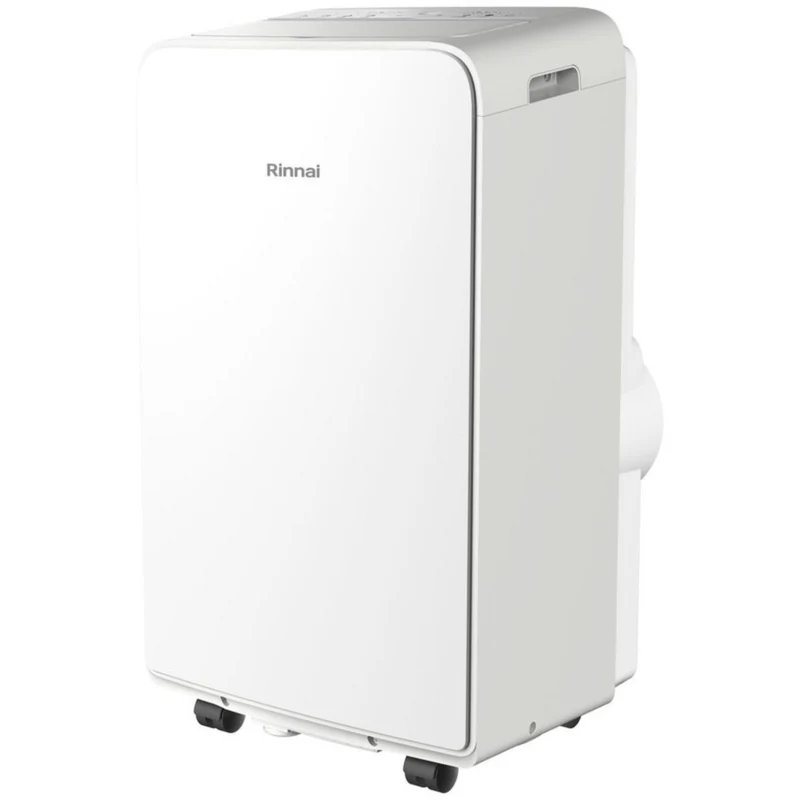
Rinnai 2.6kW Portable Air Conditioner
Best fit: 2.6kW small-room headroom + 2-year warranty
Biggest reason: Clear 11-20m² manufacturer sizing guidance
Main compromise: Lower capacity than most of the launch set
Last checked price
$876 AUD
Close to prices we've seen recently
Kogan
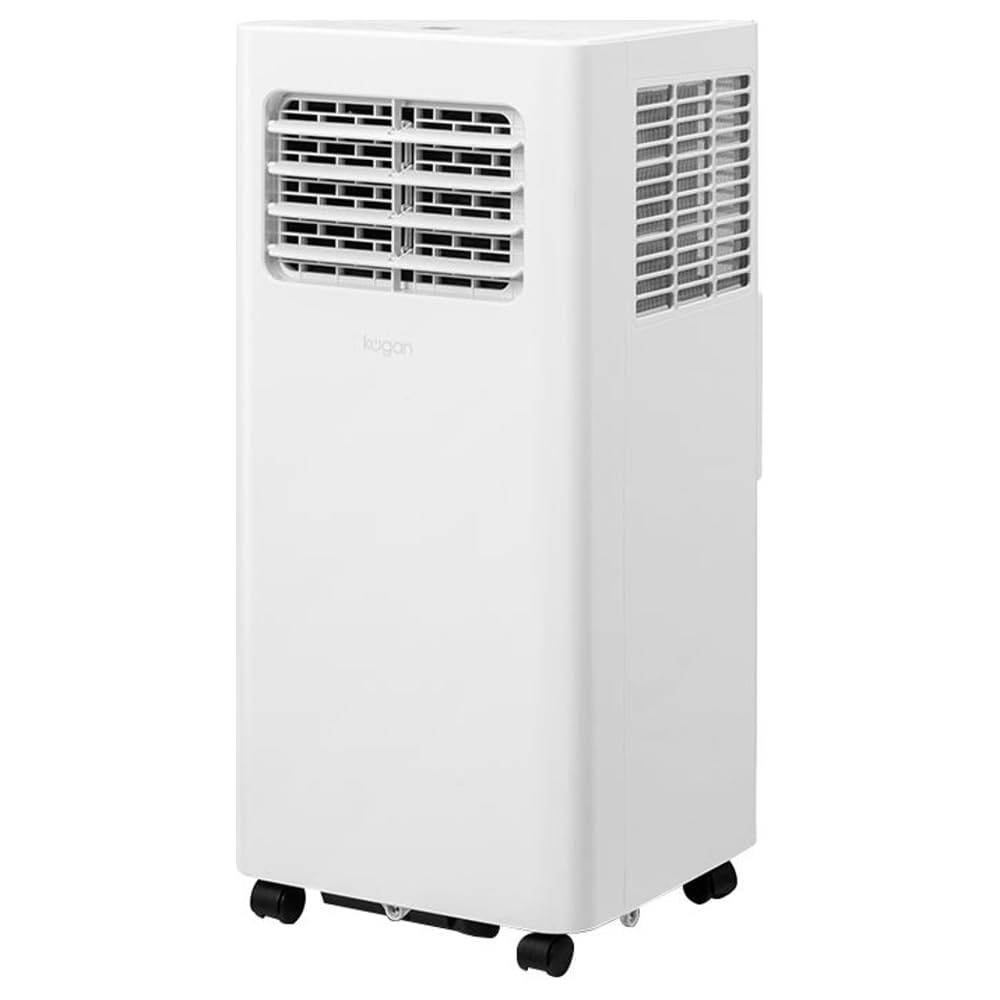
Kogan SmarterHome 2.0kW Portable Air Conditioner
Best fit: 19kg mobility + smart voice control
Biggest reason: 19kg weight
Main compromise: Lowest cooling capacity in the launch set
Key metrics
The measurable differences worth seeing side by side.
Bar length shows relative stated magnitude only. It is not a quality score or PIQSY rating.
Cooling capacity
2.6 kW
2 kW
Weight
28.5 kg
19 kg
Key differences
The key differences at a glance.
These confirmed specifications differ. The advice below explains which ones matter for your needs.
2.6kW cooling; manufacturer guidance 11-20m²
2.0kW cooling / 7,000 BTU; manufacturer guidance 12-15m²
41.5 × 34.5 × 71 cm
30.5 × 29 × 66.5 cm
2 years
1 year
2.6 kW
2 kW
11
12
20
15

What matters when choosing
What you'll actually notice
Rinnai RPC26MCWF and Kogan KAWFPAC07YA both sit at the smaller end of the portable-AC market, but they are not interchangeable.
Rinnai provides 2.6kW cooling and a two-year warranty. Kogan provides 2.0kW cooling, weighs only 19kg, and adds SmarterHome plus Alexa and Google Assistant support. Rinnai weighs 28.5kg, so the 9.5kg difference is substantial if the unit will genuinely move between rooms.
The first question is whether 2.0kW is enough for the actual room load. If it is not, Kogan's lower weight and deeper owner-feedback base cannot compensate for undersizing. If it is, the lighter Kogan can be much easier to live with.
Both are cooling-only and both require outdoor exhaust.
What changes the choice
Capacity comes before portability
Rinnai is rated at 2.6kW cooling. Kogan is rated at 2.0kW / 7,000 BTU. The 0.6kW gap is meaningful at this end of the category.
Rinnai publishes 11–20m² guidance, while Kogan publishes 12–15m². Keep those as manufacturer guidance rather than treating them as a common laboratory sizing system. Real heat load still depends on sun, glazing, insulation, ceiling height, occupancy and climate.
If the room sits near or beyond what a 2.0kW unit can reasonably serve, Rinnai's additional stated capacity matters more than Kogan's convenience features.
Kogan is much easier to move
Kogan weighs 19kg versus 28.5kg for Rinnai. That 9.5kg difference is large enough to change the day-to-day experience if you move the appliance between a bedroom, study and living area.
Rinnai is still movable on castors, but it is better thought of as an appliance that stays mainly on one level in one or two positions.
Both are connected, with different ownership trade-offs
Rinnai offers built-in Wi-Fi app control. Kogan adds SmarterHome, Amazon Alexa and Google Assistant support.
Rinnai carries a two-year warranty, while Kogan lists a one-year manufacturer warranty. The warranty difference describes written cover; it should not be converted into a prediction of lifespan.
Kogan also has a much deeper version checked owner-feedback set, currently 100 analysed signals. Rinnai's visible retailer review pool includes records originating from a 4.1kW alternate version, so those are not treated as exact RPC26 owner feedback. That gives Kogan more ownership context, but it does not increase its 2.0kW capacity.
Noise does not support a simple numerical winner
Rinnai publishes about 63.9dB(A) sound power and itself cautions that portable ACs may not suit noise-sensitive bedrooms or nurseries.
Kogan publishes up to 65dB(A), but the available figure is not identified with a directly comparable acoustic metric. Do not read 63.9 versus 65 as a valid “quieter” ranking.
What this means: size the room first. Then decide whether Rinnai's extra cooling headroom and longer warranty matter more than Kogan's much lower weight, voice control and deeper version checked owner feedback.
Switch when: move to Rinnai when 2.0kW is marginal for the room. Move to Kogan when 2.0kW is genuinely sufficient and mobility is a major part of the brief.
The practical choice
This comparison is easiest when you resist the temptation to make one product “better” overall.
Rinnai is the more conservative choice for a small room that needs some additional cooling headroom. Kogan is the more convenient choice for a genuinely small-room brief where lower weight changes how often you can move or store the unit.
Do not choose Kogan simply because it may be cheaper at a given moment. Undersizing remains undersizing. Equally, do not automatically pay for 2.6kW if the room is comfortably within the smaller tier and you would benefit every day from a 19kg appliance.
When to choose Rinnai RPC26MCWF
Choose Rinnai when 2.6kW cooling provides useful headroom for the room and a two-year warranty matters.
It suits a user who is comfortable with Wi-Fi app control without needing Alexa or Google Assistant, and who expects the unit to remain mostly in one location or move only occasionally.
It is also the more sensible branch when the room load makes a 2.0kW unit feel borderline. Capacity is the part of this comparison you should not trade away for convenience.
When to choose Kogan KAWFPAC07YA
Choose Kogan when 2.0kW is genuinely appropriate for the room and the 19kg body materially improves the way you will use the appliance.
Its SmarterHome, Alexa and Google Assistant support also make it the stronger smart-home option. The deeper version checked owner-feedback set can provide more ownership context once fit is established.
Accept the trade-offs: it has a one-year manufacturer warranty and less stated cooling capacity. Its built-in dust filter should also be treated as appliance filtration, not as evidence that it replaces a dedicated air purifier.
Choose neither when
Choose neither if you require reverse-cycle heating. Both models are cooling-only.
Choose neither when there is no practical outdoor exhaust route. A small-room portable AC still has to reject heat outside.
Also widen the shortlist if sleep-sensitive use is the main concern and you require directly comparable acoustic testing. The available Rinnai and Kogan numbers are not labelled in a way that supports a clean numeric ranking.
PIQSY conclusion
Rinnai is the higher-capacity small-room choice; Kogan is the lightweight smart-home choice.
Choose Rinnai when the room genuinely benefits from 2.6kW cooling and the longer warranty matters. Choose Kogan when 2.0kW is enough and a 19kg body, voice control and richer version checked owner context improve the ownership experience.
Confirm capacity and exhaust fit before comparing current price. A lower ticket price should never be used to justify a unit that is too small for the room.
Final choice
Choose the one that fits your needs.
Rinnai
Rinnai 2.6kW Portable Air Conditioner
Choose when: 2.6kW small-room headroom + 2-year warranty
Last checked price
$876 AUD
Close to prices we've seen recently
Kogan
Kogan SmarterHome 2.0kW Portable Air Conditioner
Choose when: 19kg mobility + smart voice control
Specifications
Compare the full specifications.
Specifications
Compare the full specifications.
2.6kW cooling; manufacturer guidance 11-20m²
2.0kW cooling / 7,000 BTU; manufacturer guidance 12-15m²
41.5 × 34.5 × 71 cm
30.5 × 29 × 66.5 cm
2 years
1 year
2.6 kW
2 kW
11
12
20
15
1,000
820
1,200
Unverified
2.6
Unverified
No
No
No
No
Yes
Yes
No
Yes
63.9 dB(A)
Unverified
R290
R290
28.5 kg
19 kg
16
16
32
30
Unverified
7,000
Unverified
2
Unverified
300 m³/h
Unverified
0.5
Unverified
65 dB(A)
Unverified
UNSPECIFIED
Still not clear?
Let your own priorities break the tie.
How we checked this
See the Australian models and sources PIQSY checked for this page.
How we checked this
See the Australian models and sources PIQSY checked for this page.
How we checked this
How PIQSY checked this page
We checked the Australian model and dated manufacturer or retailer sources rather than borrowing specifications from an overseas variant.
Australian model checked
2 Australian models checked
Sources used
Manufacturer · Australian retailer · Amazon AU
Sources checked through 23 Aug 2026
Last checked
26 Aug 2026
Current price and availability are checked separately where shown.
Hands-on testing: PIQSY has not physically tested this product for this page unless hands-on testing is explicitly disclosed.
What we could and couldn’t verify: If specifications conflict, cannot be matched to the Australian variant or cannot be confirmed, we leave them unresolved rather than guessing. Owner feedback is shown only when we can attribute it to the product we checked.
See models and source details
- Rinnai 2.6kW Portable Air Conditioner RPC26MCWF: RPC26MCWF
- Kogan SmarterHome 2.0kW Portable Air Conditioner KAWFPAC07YA: KAWFPAC07YA
Sources used
- Manufacturer · rinnai.com.au · Rinnai 2.6kW Portable Air Conditioner RPC26MCWF · checked 23 Aug 2026
- Manufacturer · rinnai.com.au · Rinnai 2.6kW Portable Air Conditioner RPC26MCWF · checked 23 Aug 2026
- Manufacturer · rinnai.com.au · Rinnai 2.6kW Portable Air Conditioner RPC26MCWF · checked 23 Aug 2026
- Australian retailer · appliancesonline.com.au · Rinnai 2.6kW Portable Air Conditioner RPC26MCWF · checked 23 Aug 2026
- Manufacturer · kogan.com · Kogan SmarterHome 2.0kW Portable Air Conditioner KAWFPAC07YA · checked 23 Aug 2026
- Manufacturer · assets.kogan.com · Kogan SmarterHome 2.0kW Portable Air Conditioner KAWFPAC07YA · checked 23 Aug 2026
- Amazon AU · amazon.com.au · Kogan SmarterHome 2.0kW Portable Air Conditioner KAWFPAC07YA · checked 23 Aug 2026