
PIQSY Compare
Midea Reverse Cycle Portable Air Conditioner vs Hyundai 3.8kW Smart Reverse Cycle Portable Air Conditioner
Compare Midea MPPD33H and Hyundai HY13KSPACPA on reverse-cycle cooling/heating, i-Sense, smart control, weight, dimensions, venting and owner feedback.
The choice that matters
Choose Midea for temperature sensing near the remote.
Choose Hyundai for smart controls and portability.
Decision snapshot
Start with how you’ll use it.
Midea
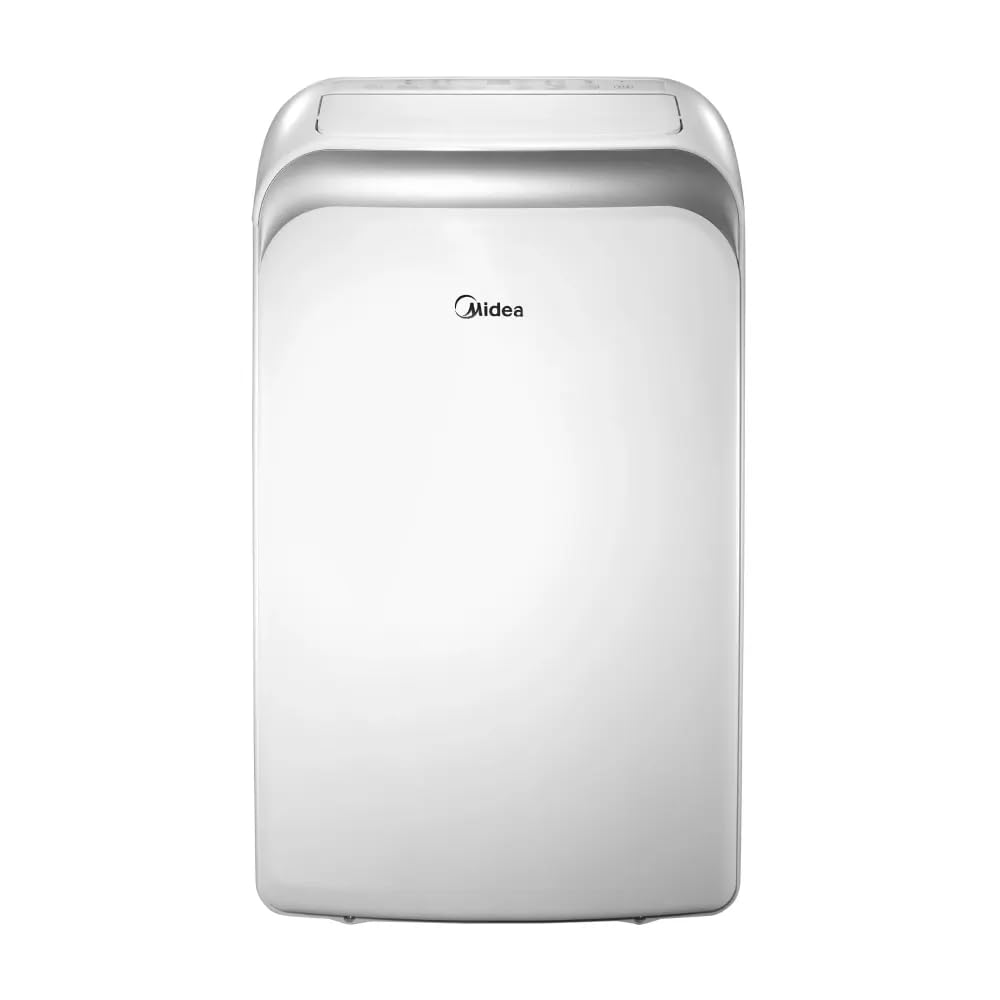
Midea Reverse Cycle Portable Air Conditioner
Best fit: Reverse cycle + i-Sense remote temperature sensing
Biggest reason: Reverse-cycle cooling and heat-pump heating
Main compromise: Relatively heavy
Hyundai
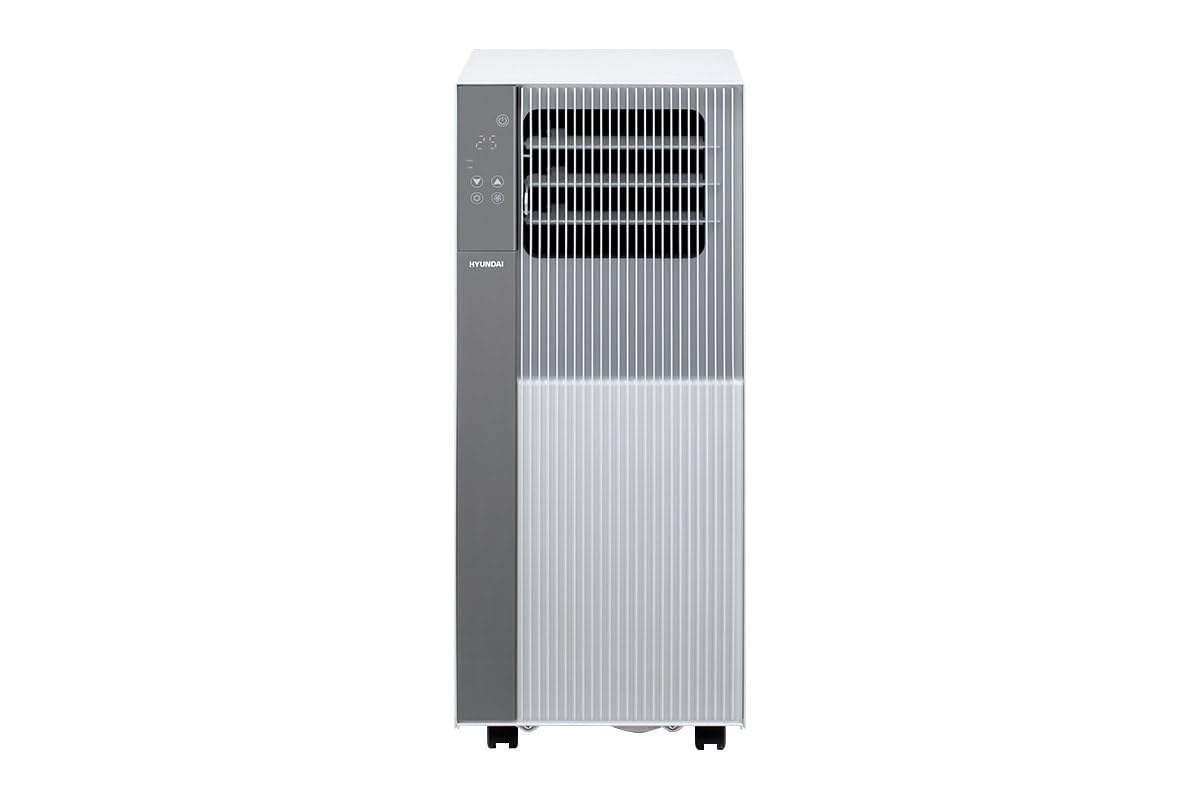
Hyundai 3.8kW Smart Reverse Cycle Portable Air Conditioner
Best fit: Reverse cycle + built-in smart control + lower weight
Biggest reason: 3.8kW cooling plus 2.8kW heating
Main compromise: One-year warranty
Key metrics
The measurable differences worth seeing side by side.
Bar length shows relative stated magnitude only. It is not a quality score or PIQSY rating.
Cooling capacity
3.38 kW
3.8 kW
Weight
37 kg
24.8 kg
Key differences
The key differences at a glance.
These confirmed specifications differ. The advice below explains which ones matter for your needs.
3.38kW cooling / 2.81kW heating; manufacturer guidance 16-23m²
3.8kW cooling / 2.8kW heating; manufacturer guidance up to 27m²
46.6 × 39.7 × 76.5 cm
29.8 × 33.5 × 69.8 cm
3.38 kW
3.8 kW
2.81 kW
2.8 kW
23
27
1,450
1,461


What matters when choosing
What you'll actually notice
Midea MPPD33H and Hyundai HY13KSPACPA are the two reverse-cycle options in the current portable-AC shortlist, so both can cover cooling and heat-pump heating. Their day-to-day character is different.
Midea is rated at about 3.38kW cooling / 2.81kW heating and adds i-Sense / Follow Me, which lets the remote act as the temperature reference near the user. Hyundai is rated at 3.8kW cooling / 2.8kW heating, includes built-in smart/voice control, and weighs only 24.8kg compared with Midea at 37kg.
That makes Midea the remote-sensing choice and Hyundai the connected, easier-to-move choice. Neither avoids the need for outdoor exhaust in cooling mode.
What changes the choice
Both cover heating, but Hyundai has more stated cooling capacity
Midea publishes about 3.38kW cooling and 2.81kW heating. Hyundai publishes 3.8kW cooling and 2.8kW heating.
The heating figures are effectively in the same tier. Hyundai's 0.42kW higher stated cooling capacity may matter when the room has a higher summer heat load, but it is not proof of better real-world performance in every room.
Midea publishes 16–23m² room guidance and Hyundai up to 27m². Keep those as manufacturer guidance rather than using them as a standardised cross-brand test.
Midea's i-Sense changes where temperature is measured
Midea's i-Sense / Follow Me lets the remote become the temperature reference near the occupied area. That can be useful when the appliance sits beside a hot window but the sofa, desk or bed is several metres away.
Hyundai does not have an equivalent verified Follow Me feature. Its strength is remote operation rather than remote-location temperature sensing.
Hyundai is much lighter and has the stronger built-in smart-control case
Midea weighs 37kg and measures 765H × 466W × 397D mm. Hyundai is 24.8kg and 698H × 298W × 335D mm.
A 12.2kg difference is large enough to matter for room-to-room movement and storage. Hyundai also includes built-in smart control with Alexa and Google Assistant compatibility. Midea's Wi-Fi is optional rather than verified as standard equipment.
Electrical input and support context need careful interpretation
Midea's published rated cooling input is 1,450W. Hyundai's current Australian sell-state page lists 1,461W cooling consumption and 1,120W heating consumption. Those are specifications, not enough by themselves to declare a universal efficiency winner.
Midea is sold through Midea Australia's product/support channel. Hyundai branding is licensed for this appliance, with Kogan Australia as the Australian importer/distributor context. That matters for understanding the support path, but it is not a quality score and should not be inferred from Hyundai's automotive reputation.
What this means: both solve the heating requirement. The real decision is whether you value Midea's remote-location sensing or Hyundai's lower weight, built-in connectivity and higher stated cooling capacity.
Switch when: move to Hyundai when mobility or standard smart control becomes more important than Follow Me sensing. Move to Midea when temperature sensing near the occupied zone is the feature you will actually use.
The practical choice
If the unit will mostly stay in one room, Midea's 37kg weight may matter less and i-Sense can become the more useful differentiator. If the appliance will move between rooms or be stored seasonally, Hyundai's 24.8kg body is a much more practical proposition.
For connected control, Hyundai is the cleaner choice because the smart workflow is built in. Midea can still suit a user who primarily relies on the remote and values Follow Me sensing more than app or voice control.
For either model, confirm the exhaust arrangement before buying. Reverse-cycle capability expands the seasonal role, but it does not make refrigerated cooling work without an outdoor exhaust path.
When to choose Midea MPPD33H
Choose Midea when reverse-cycle heating is required and i-Sense / Follow Me solves a real comfort problem in the room.
It is particularly relevant when the unit must sit near a window while the occupied zone is elsewhere. In that situation, using the remote as the temperature reference can be more valuable than having a larger smart-home feature list.
Choose it only if the 37kg body and larger cabinet are acceptable, optional Wi-Fi is sufficient, and the exhaust setup works.
When to choose Hyundai HY13KSPACPA
Choose Hyundai when you want reverse-cycle heating, 3.8kW stated cooling, built-in smart/voice control and a substantially lighter 24.8kg body.
It is the more convenient route for a shopper who expects to move the unit more often or wants app/voice integration without relying on optional connectivity hardware.
Accept the trade-off: Hyundai does not provide Midea's verified Follow Me temperature-sensing feature. Also evaluate the actual Kogan Australia support/distributor path for this appliance rather than assuming the automotive brand's service model applies.
Choose neither when
Choose neither if you do not actually need heating and a cooling-only model better fits your budget, weight or control priorities. Reverse-cycle capability is valuable when you will use it, not automatically valuable for every room.
Also choose neither when the intended room cannot support a practical outdoor exhaust route in cooling mode.
If frequent stair carrying is central to the brief, Hyundai is lighter but neither model is a genuinely light carry appliance.
PIQSY conclusion
Midea MPPD33H is the remote-sensing reverse-cycle choice; Hyundai HY13KSPACPA is the lighter connected reverse-cycle choice.
Choose Midea when i-Sense / Follow Me matters more than built-in smart-home control. Choose Hyundai when the higher stated cooling capacity, 24.8kg body and standard app/voice workflow better suit the room and ownership pattern.
Both cover heating. Confirm cooling-mode exhaust fit first, then compare current delivered price, stock and purchase terms.
Final choice
Choose the one that fits your needs.
Midea
Midea Reverse Cycle Portable Air Conditioner
Choose when: Reverse cycle + i-Sense remote temperature sensing
Hyundai
Hyundai 3.8kW Smart Reverse Cycle Portable Air Conditioner
Choose when: Reverse cycle + built-in smart control + lower weight
Specifications
Compare the full specifications.
Specifications
Compare the full specifications.
3.38kW cooling / 2.81kW heating; manufacturer guidance 16-23m²
3.8kW cooling / 2.8kW heating; manufacturer guidance up to 27m²
46.6 × 39.7 × 76.5 cm
29.8 × 33.5 × 69.8 cm
Unverified
1 year
3.38 kW
3.8 kW
2.81 kW
2.8 kW
16
Unverified
23
27
1,450
1,461
No
No
Yes
Yes
No
Yes
Yes
Unverified
No
Yes
Yes
Unverified
R290
R290
37 kg
24.8 kg
Unverified
13,000
Unverified
1,120
Unverified
2
Unverified
320 m³/h
Unverified
1.7
Unverified
65 dB(A)
Still not clear?
Let your own priorities break the tie.
How we checked this
See the Australian models and sources PIQSY checked for this page.
How we checked this
See the Australian models and sources PIQSY checked for this page.
How we checked this
How PIQSY checked this page
We checked the Australian model and dated manufacturer or retailer sources rather than borrowing specifications from an overseas variant.
Australian model checked
2 Australian models checked
Sources used
Manufacturer · Amazon AU · Australian distributor
Sources checked through 23 Aug 2026
Last checked
26 Aug 2026
Current price and availability are checked separately where shown.
Hands-on testing: PIQSY has not physically tested this product for this page unless hands-on testing is explicitly disclosed.
What we could and couldn’t verify: If specifications conflict, cannot be matched to the Australian variant or cannot be confirmed, we leave them unresolved rather than guessing. Owner feedback is shown only when we can attribute it to the product we checked.
See models and source details
- Midea MPPD33H Reverse Cycle Portable Air Conditioner: MPPD33H
- Hyundai 3.8kW Smart Reverse Cycle Portable Air Conditioner HY13KSPACPA: HY13KSPACPA
Sources used
- Manufacturer · midea.com · Midea MPPD33H Reverse Cycle Portable Air Conditioner · checked 23 Aug 2026
- Manufacturer · midea.com · Midea MPPD33H Reverse Cycle Portable Air Conditioner · checked 23 Aug 2026
- Amazon AU · amazon.com.au · Midea MPPD33H Reverse Cycle Portable Air Conditioner · checked 23 Aug 2026
- Australian distributor · kogan.com · Hyundai 3.8kW Smart Reverse Cycle Portable Air Conditioner HY13KSPACPA · checked 23 Aug 2026
- Australian distributor · assets.kogan.com · Hyundai 3.8kW Smart Reverse Cycle Portable Air Conditioner HY13KSPACPA · checked 23 Aug 2026
- Amazon AU · amazon.com.au · Hyundai 3.8kW Smart Reverse Cycle Portable Air Conditioner HY13KSPACPA · checked 23 Aug 2026