
PIQSY Guide
Best Dehumidifier for a Bedroom: Size, Noise and Temperature Change the Choice
A decision-first bedroom dehumidifier guide for Australia, comparing compact compressor, desiccant and large-tank options by room fit, noise evidence, drainage and smart control.
The decision this guide answers
Which dehumidifier fits a bedroom once room size, operating temperature, manufacturer noise evidence, tank or drainage workflow and connected control are considered together?
Quick answer
A bedroom dehumidifier has to fit the room size, temperature, overnight noise tolerance and drainage routine. The largest extraction number or smallest printed dB figure does not answer all four.
For the current PIQSY shortlist, four useful bedroom roles are AusClimate ACD212, Breville LAD208, Ionmax ION610 and Midea MDDM20. They are not ranked from best to worst because they solve different bedroom problems.

Compact connected small-room compressor
AusClimate Compact 12L Smart DehumidifierShoppers wanting a compact smart compressor dehumidifier for a small room.

Connected small-room model with two test points
Breville the Smart Dry Connect DehumidifierShoppers wanting a mainstream connected small-room dehumidifier from a widely distributed appliance brand.

Light desiccant route for a smaller or cooler room
Ionmax 6L Desiccant DehumidifierShoppers needing a compact desiccant dehumidifier for smaller or cooler spaces.
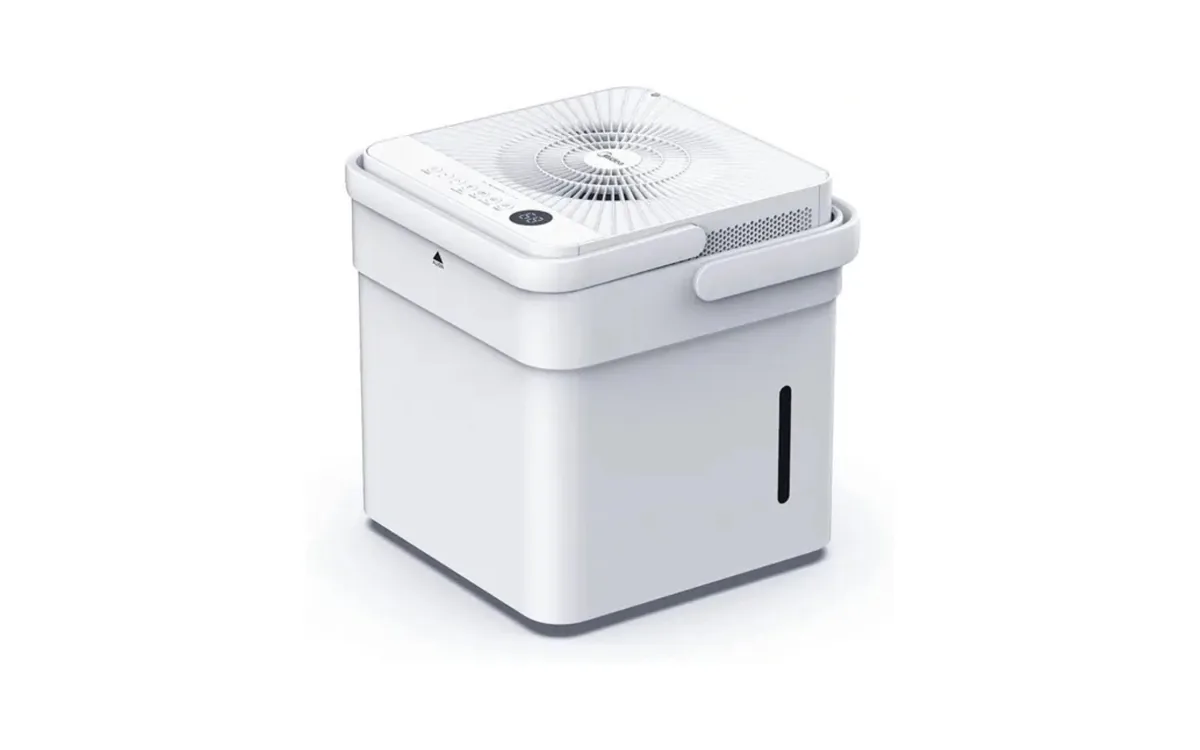
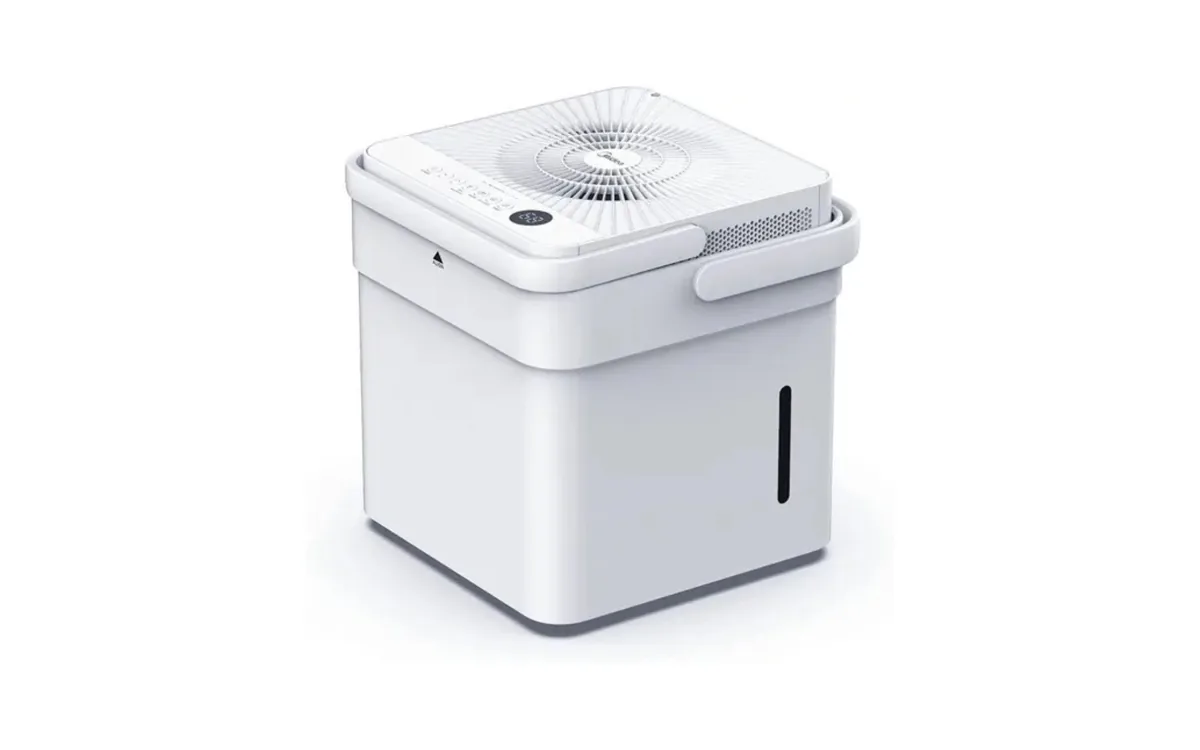
Large-tank option when fewer bucket empties matter
Midea Cube DehumidifierShoppers wanting a high-demand 20L smart dehumidifier with an unusually large 12L collection tank.
The shortcut is to decide the room first, then the architecture, then the ownership routine. Noise matters, but only after the product is the right size and type for the space.
What should you decide first?
How large is the bedroom?
AusClimate ACD212 is manufacturer-guided up to 20m² and combines 12L/day at 30°C/80% RH with a compact body, Wi-Fi and continuous drainage.
Breville LAD208 is manufacturer-guided up to 30m² and publishes 10L/day at 30°C/80% RH plus 5L/day at 27°C/60% RH.
Those manufacturer room figures are useful orientation, not a harmonised independent sizing system. Treat them as boundaries for the product's intended role rather than a universal room-size scoreboard.
If the room is clearly beyond the compact class or the moisture load is heavy, step up in capacity instead of forcing a bedroom-friendly product to do a larger job.
Is the room consistently cool?
If cooler-room operation is part of the problem, compare architecture before headline capacity.
Ionmax ION610 is a desiccant model rated at 6L/day at 20°C/60% RH and weighs 5.1kg. It does not have Wi-Fi. That gives it a distinct role from the connected compressor models rather than making it a weaker version of them.
Read Compressor vs Desiccant Dehumidifiers if temperature is a first-order part of the bedroom decision.
How sensitive are you to overnight noise?
ACD212 carries a 38dB(A) manufacturer claim. LAD208 carries a 40dB(A) manufacturer claim. Midea's current record states 40–43dB(A) laboratory noise.
Do not turn those figures into a laboratory-proven quietness ranking unless the measurement method and operating mode are directly comparable. A printed dB number is screening information, not a promise of undisturbed sleep.
For a bedroom, the more defensible question is whether the product has credible published acoustic context you are comfortable with and whether the rest of its room fit, drainage and operating mode make sense.
Which type fits you?
AusClimate ACD212 — compact connected compressor
Choose ACD212 when the room is genuinely small, you want Wi-Fi and continuous drainage, and the 2L tank is acceptable as a backup rather than the whole ownership plan.
Its compact dimensions suit a bedroom where floor space matters. The 38dB(A) manufacturer figure gives you useful noise context, but it should not be treated as independent proof that it will be silent beside the bed.
Read the ACD212 Verdict or compare it with Breville LAD208.
Breville LAD208 — connected mainstream small-room route
Choose LAD208 when Breville's two published extraction test points, 2.5L tank and connected gravity-drain workflow fit your room.
The second 5L/day figure at 27°C/60% RH is useful because it shows how strongly the extraction headline changes under milder conditions. That does not make LAD208 automatically better; it makes the specification easier to interpret.
Ionmax ION610 — lighter desiccant route
Choose ION610 when a 5.1kg desiccant model for a smaller or cooler room makes more sense than app control or a larger compressor.
Its 1.8L tank means continuous drainage is valuable for longer sessions. Its low weight is the reason to prefer it when one machine will move between smaller rooms.
Midea MDDM20 — large-tank route
Choose MDDM20 when fewer bucket empties are more important than having every drainage and test-condition field resolved. Its 12L tank is unusually large within this launch set.
That large reservoir is most useful when a hose cannot stay connected. If a permanent drain is available, the Midea's defining advantage becomes less important and a more completely specified drainage workflow may suit you better.
Read the Midea MDDM20 Verdict or compare Midea with ACD220.
Decision factors
Tank or drain?
Small-room products often use smaller tanks. ACD212 has 2L, LAD208 2.5L and ION610 1.8L. All three have verified continuous drainage.
Midea MDDM20 is different: its 12L tank is the reason to consider it if you want fewer manual bucket empties. Its current Australian record does not clearly confirm continuous drainage, so do not assume the Midea can replace a verified hose-based workflow.
The practical decision is how you expect the machine to collect water overnight. A small tank can be perfectly workable beside a drain; a large tank can be much easier when no drain is available.
Connected control or simpler local operation?
ACD212 and LAD208 have verified connected control. MDDM20 has Wi-Fi and smartphone control. ION610 does not have Wi-Fi.
Remote control can make a bedroom routine more convenient when you want to adjust or schedule the machine without standing beside it. It does not prove better extraction or quieter operation. If you will rarely use the app, local control may be completely adequate.
Will the machine move between rooms?
ION610's 5.1kg weight gives it a clear advantage if the dehumidifier will regularly move from bedroom to study or laundry. The heavier compressor models are better thought of as movable appliances rather than truly portable ones.
If the machine will stay in one bedroom, weight matters less and connected control, drainage and tank size become more important.
Common buying mistakes
The first mistake is buying the smallest dB number. Manufacturer acoustic figures are useful, but they are not automatically comparable across measurement methods and modes. A product that is slightly quieter on paper can still be the wrong size, architecture or drainage workflow for the room.
The second mistake is buying excess capacity for reassurance. A much larger machine can add weight and footprint without improving a small-room routine. Size the room honestly before moving into the 20L-plus classes.
The third mistake is assuming a large tank and a drain hose solve the same problem. A large tank extends bucket-only sessions. Continuous drainage can remove the bucket routine almost entirely. Decide which setup your bedroom can actually support.
The fourth mistake is assuming smart control changes the dehumidification physics. Wi-Fi improves convenience; it does not turn a small-room compressor into a large-room machine or a compressor into a desiccant model.
Where should you go next?
If you want the compact connected route, read the ACD212 Verdict and ACD212 vs LAD208 comparison.
If cooler-room operation is the real issue, read the ION610 Verdict and Compressor vs Desiccant guide.
If bucket emptying is the main frustration, read the Midea MDDM20 Verdict and Midea vs ACD220 comparison.
For the full category decision map, read Best Dehumidifiers in Australia or use PIQSY Match.
For a bedroom, the priority order is room fit and temperature → credible noise context → tank or drainage routine → connected control and portability. The best product changes when any one of those constraints changes.
PIQSY Care
Already own one? Keep it working properly.
Practical cleaning, maintenance and troubleshooting for this category, grounded in current manufacturer guidance.
Care guide
Dehumidifier Filter and Drainage Care: What to Clean and Check
How should I clean a dehumidifier filter and maintain tank or continuous drainage without blocking airflow, creating leaks or copying the wrong drainage setup?
Open Care guide →Care guide
Dehumidifier Not Collecting Water? What to Check First
Is my dehumidifier not collecting water because the room is already dry, the set humidity is too high, airflow is restricted, drainage is mis-set, or the appliance needs service?
Open Care guide →Apply what you learned
Turn the trade-off into a shortlist that fits you.
Keep Exploring
How we checked this
See the Australian models and sources PIQSY checked for this page.
How we checked this
See the Australian models and sources PIQSY checked for this page.
How we checked this
How PIQSY checked this page
We checked the Australian model and dated manufacturer or retailer sources rather than borrowing specifications from an overseas variant.
Australian model checked
4 Australian models checked
Sources used
Manufacturer · Amazon AU · Australian retailer
Sources checked through 23 Sept 2026
Last checked
26 Sept 2026
Current price and availability are checked separately where shown.
Hands-on testing: PIQSY has not physically tested this product for this page unless hands-on testing is explicitly disclosed.
What we could and couldn’t verify: If specifications conflict, cannot be matched to the Australian variant or cannot be confirmed, we leave them unresolved rather than guessing. Owner feedback is shown only when we can attribute it to the product we checked.
See models and source details
- AusClimate Compact 12L Smart Dehumidifier: ACD212
- Breville the Smart Dry Connect Dehumidifier: LAD208WHT2IAN1
- Ionmax ION610 6L Dehumidifier: ION610
- Midea Cube Dehumidifier: MDDM20
Sources used
- Manufacturer · ausclimate.com.au · AusClimate Compact 12L Smart Dehumidifier · checked 21 Sept 2026
- Amazon AU · amazon.com.au · AusClimate Compact 12L Smart Dehumidifier · checked 21 Sept 2026
- Manufacturer · breville.com · Breville the Smart Dry Connect Dehumidifier · checked 21 Sept 2026
- Manufacturer · breville.com · Breville the Smart Dry Connect Dehumidifier · checked 21 Sept 2026
- Australian retailer · harveynorman.com.au · Breville the Smart Dry Connect Dehumidifier · checked 21 Sept 2026
- Amazon AU · amazon.com.au · Breville the Smart Dry Connect Dehumidifier · checked 21 Sept 2026
- Australian retailer · appliancesonline.com.au · Breville the Smart Dry Connect Dehumidifier · checked 21 Sept 2026
- Manufacturer · ionmax.com.au · Ionmax ION610 6L Dehumidifier · checked 21 Sept 2026
- Amazon AU · amazon.com.au · Ionmax ION610 6L Dehumidifier · checked 21 Sept 2026
- Manufacturer · mdhome.com.au · Midea Cube Dehumidifier · checked 23 Sept 2026
- Manufacturer · mdhome.com.au · Midea Cube Dehumidifier · checked 23 Sept 2026
- Australian retailer · andoo.com.au · Midea Cube Dehumidifier · checked 23 Sept 2026