
PIQSY Compare
Levoit Core 600S Smart Air Purifier vs Coway Airmega 400
Compare Core 600S and Airmega 400 for larger rooms using CADR evidence quality, smart controls, filtration, acoustics and room-sizing boundaries.
The choice that matters
Choose Levoit for connected large-room operation.
Choose Coway for its established airflow credentials.

Decision snapshot
Start with how you’ll use it.
Levoit
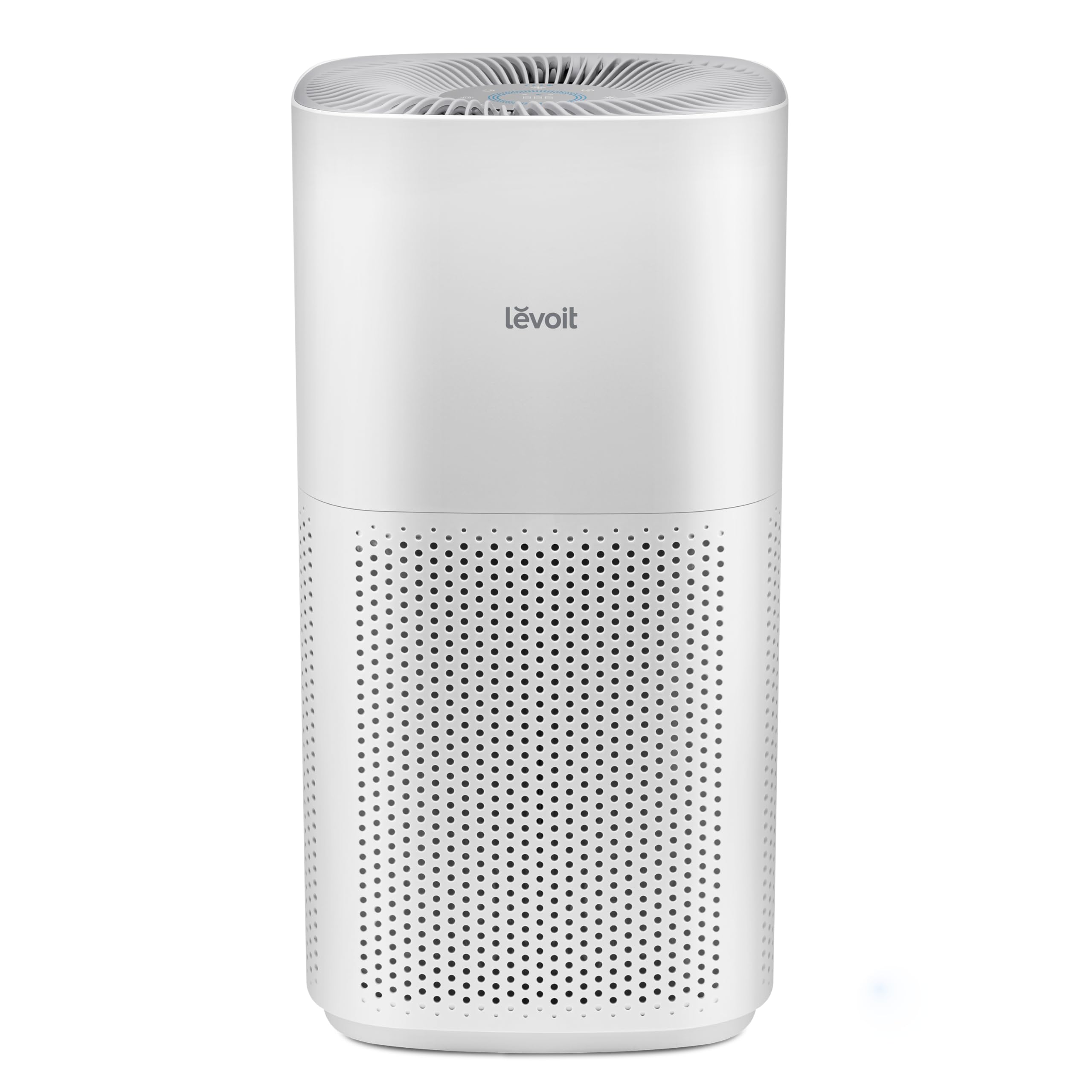
Levoit Core 600S Smart Air Purifier
Best fit: Connected high-throughput role
Biggest reason: High-throughput role
Main compromise: Official AU page publishes 600, 697 and 711 m³/h CADR
Last checked price
$459 AUD
Close to prices we've seen recently
Lowest recorded $429.00 · 29 Aug
Coway
Coway Airmega 400
Best fit: Resolved high-throughput evidence
Biggest reason: 677 m³/h official AU CADR
Main compromise: High price
Last checked price
$999 AUD
Close to prices we've seen recently
Key differences
The key differences at a glance.
These confirmed specifications differ. The advice below explains which ones matter for your needs.
600 m³/h
677 m³/h
711 m³/h
677 m³/h
Yes
No
148
176
26 dB
22 dB
204
169


What matters when choosing
What you'll actually notice
Both target larger-room use, but the important difference is what is resolved in the evidence.
Choose the Levoit Core 600S when VeSync control, schedules and connected automation are hard requirements and you can accept that its exact current CADR remains unresolved.
Choose the Coway Airmega 400 when a resolved 677 m³/h Australian CADR, Sensitive Choice accreditation and app-free mechanical filtration matter more.
These are both large-room candidates, but the evidence is cleaner on one side. Airmega 400 has a resolved 677 m³/h Australian CADR. Core 600S has a high-airflow role but current Australian material contains 600, 697 and 711 m³/h figures, so PIQSY does not force it into one exact ranking.
That makes the durable split connected smart control versus a cleaner confirmed airflow reference. Core 600S brings VeSync; Airmega 400 brings the clearer like-for-like airflow anchor and Sensitive Choice approval.
What changes the choice
Airmega 400 gives you the cleaner sizing anchor
Levoit's live Australian Core 600S material contains 600, 697 and 711 m³/h figures in different places, so the exact current CADR remains unresolved.
Coway Australia publishes 677 m³/h for Airmega 400. That does not prove Coway is universally better, but it makes room sizing and cross-product comparison much cleaner when you need one resolved throughput figure.
Core 600S is the connected workflow
Core 600S supports VeSync, schedules, PM2.5 sensing, automatic operation and compatible voice control. Airmega 400 provides local automatic air-quality control and PM2.5 sensing but no app in the Australian record.
If remote operation and schedules materially change how you will use the purifier, Levoit has the clearer ownership advantage. If the appliance will simply stay in Auto mode, that advantage is smaller.
Their filtration architecture is broadly similar
Both records use particle and activated-carbon filtration, with no ionisation, electrostatic particle treatment or UV stage.
Airmega 400 also carries Sensitive Choice approval. That is relevant allergy-oriented accreditation, not a performance multiplier or medical guarantee.
Noise evidence is useful but not directly equivalent
Airmega 400 has a 22–52 dB manufacturer range. Core 600S carries a 26 dB minimum claim, without a directly comparable maximum in the information we checked.
These figures can help with room planning, but they are not an equal-airflow laboratory comparison and do not support a universal quietness winner.
Large room-area claims still need their air-change context
Headline square-metre coverage is not a substitute for resolved clean-air delivery when the underlying ACH basis differs or is unclear. For Airmega 400, 677 m³/h is the cleaner performance anchor. For Core 600S, the manufacturer CADR conflict remains visible rather than being replaced by a more flattering area claim.
The practical choice
Choose from evidence confidence and control workflow first. Airmega 400 is easier to size when you want one confirmed CADR; Core 600S is more compelling when app control is important and you are comfortable with the published CADR uncertainty.
Both are substantial large-room machines. If your space is actually medium-sized, stepping down to a smaller class can reduce purchase cost, filter cost and physical footprint without sacrificing the room fit you need.
When to choose Core 600S
Choose Levoit when connected control is genuinely important and you are comfortable sizing around an unresolved exact CADR rather than pretending one of the manufacturer's competing figures is authoritative.
When to choose Airmega 400
Choose Coway when one resolved high-throughput CADR, Sensitive Choice accreditation and local automatic operation make the ownership case clearer than app control.
Choose neither when
Move down the category if the room does not need this airflow class. If precise connected high-throughput sizing is non-negotiable, the Core 600S evidence conflict may also push you toward another resolved smart model.
Before using price as the tie-breaker, think through the speed you actually need. A purifier used continuously in an ordinary bedroom has a different job from one bought to clear smoke quickly after outdoor air quality deteriorates. The more urgent the clearing job, the more important a confirmed airflow figure and realistic room volume become. For steady background use, control convenience, sleep noise and maintenance can reasonably carry more weight once basic sizing is satisfied.
Also separate purchase convenience from ownership fit. Filter replacement frequency, app dependence, sensor automation and any ionisation or other treatment stage will affect the machine every month you own it. Those durable differences deserve more weight than a temporary discount or retailer rating. If one product fits the room but conflicts with how you want to operate or maintain it, the other product can be the better long-term choice even when its headline specification looks less impressive.
PIQSY conclusion
Core 600S wins on connected workflow; Airmega 400 wins on evidence clarity. The better choice depends on whether app automation or a single resolved high-throughput CADR is the harder requirement.
Final choice
Choose the one that fits your needs.
Levoit
Levoit Core 600S Smart Air Purifier
Choose when: Connected high-throughput role
Last checked price
$459 AUD
Close to prices we've seen recently
Lowest recorded $429.00 · 29 Aug
Coway
Coway Airmega 400
Choose when: Resolved high-throughput evidence
Last checked price
$999 AUD
Close to prices we've seen recently
Specifications
Compare the full specifications.
Specifications
Compare the full specifications.
Unverified
Unverified
Unverified
58.4 x 38 x 38 cm
2-year limited warranty
Unverified
Unverified
677 m³/h
600 m³/h
677 m³/h
711 m³/h
677 m³/h
Yes
No
148
176
Unverified
Unverified
26 dB
22 dB
Unverified
52 dB
204
169
7
12
Unverified
66 W
Yes
Yes
Yes
Yes
No
No
No
No
No
No
No
No
No
No
Yes
No
Yes
Yes
Yes
Yes
No
Yes
No
No
Still not clear?
Let your own priorities break the tie.
Keep Exploring
How we checked this
See the Australian models and sources PIQSY checked for this page.
How we checked this
See the Australian models and sources PIQSY checked for this page.
How we checked this
How PIQSY checked this page
We checked the Australian model and dated manufacturer or retailer sources rather than borrowing specifications from an overseas variant.
Australian model checked
2 Australian models checked
Sources used
Manufacturer · Amazon AU
Sources checked through 26 Aug 2026
Last checked
6 Sept 2026
Current price and availability are checked separately where shown.
Hands-on testing: PIQSY has not physically tested this product for this page unless hands-on testing is explicitly disclosed.
What we could and couldn’t verify: If specifications conflict, cannot be matched to the Australian variant or cannot be confirmed, we leave them unresolved rather than guessing. Owner feedback is shown only when we can attribute it to the product we checked.
See models and source details
- Core 600S Smart Air Purifier: Core 600S
- Airmega 400: Airmega 400
Sources used
- Manufacturer · levoit.au · Core 600S Smart Air Purifier · checked 18 Aug 2026
- Amazon AU · amazon.com.au · Core 600S Smart Air Purifier · checked 18 Aug 2026
- Manufacturer · au.coway.com · Airmega 400 · checked 26 Aug 2026
- Amazon AU · amazon.com.au · Airmega 400 · checked 17 Aug 2026